Anghus Houvouras on The Boys, and why many big shows fail to stick their landing…

There is a distinct, recurring phantom that haunts the final seasons of our favorite massive television shows. We watched it hollow out Game of Thrones. We are watching Stranger Things drag its feet against it. We see the strain of it in The Boys.
While you can’t attribute the decline of these cultural juggernauts to a single creative misstep, they all share a glaring common denominator: They have too many characters.
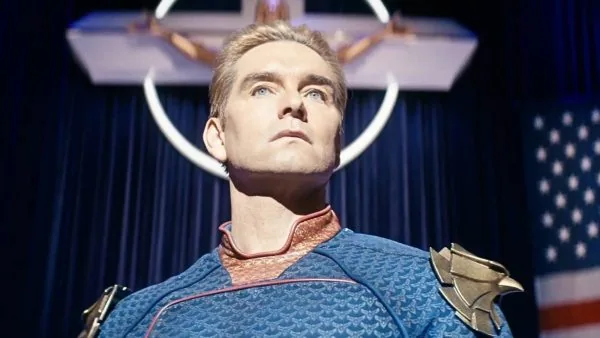
Hughie, Butcher, Frenchie, Mother’s Milk, Starlight, Kimiko, A-Train, Homelander, The Deep, Ashley, Black Noir, Soldier Boy.
When a series scales up to epic proportions, it builds a massive narrative debt. And when the final season arrives, the bill comes due. Unfortunately, in the era of the modern streaming model, showrunners are trying to pay off that debt with empty pockets.
Streaming Shrinkflation
The math simply doesn’t work anymore. In the golden age of network television, a showrunner had 22 to 24 episodes a season to play with. If you had an ensemble cast, you could dedicate an entire B-story in episode 14 to letting a secondary character wrap up their personal arc.
Today, we get eight to ten episodes every two years. Yet, we still have a dozen or more characters filling up complex A, B, and C stories that have been meticulously developed over nearly a decade. When the final season hits, creators are forced to drag everyone across the finish line at a breakneck sprint.
The problem is that TV writers rarely write with the final destination in mind. They write to survive. A writer’s room tackles a show season by season, fighting to fill out individual episodes and hit a yearly finale. They use new characters like kindling to keep the fire burning today, rarely calculating how much ash it will leave behind tomorrow.

Ryan George famously nailed this structural absurdity in his Screen Rant Pitch Meeting for the final season of Game of Thrones. When the studio executive logically points out that HBO would gladly give the creators more episodes or more seasons to finish the story properly, the writer defiantly insists: “Dang it, we just don’t have any time!”
It’s funny because it’s true. Showrunners engineer themselves into a corner where satisfying closure becomes mathematically impossible. There are too many threads to weave, too many arcs to land, and simply not enough minutes on the clock.
The “Fewer Clients” Manifesto
So, what’s the solution? I won’t try and tell you there is one simple way to fix this problem. In any creative endeavor, nearly infinite factors can contribute to a successful conclusion. However, I do believe there’s one common factor with all these failures that could help mitigate the potential for a failing final season. It lies in an unexpected place: a late-night, existential breakdown in a Miami hotel room from one of the 20th century’s best movies.
In Jerry Maguire, the titular sports agent suffers a breakthrough of conscience. He looks at a broken, bloated industry and pens a vision statement “The Things We Think and Do Not Say.” His core argument is that the pursuit of “more” has destroyed the soul of his profession. His pitch to save the company?
Fewer clients. Less money. More care.
Modern television desperately needs its own version of that manifesto, built on a singular conceit: Fewer characters.

We are already starting to see the benefits of this pivot. Look at the anticipation surrounding A Knight of the Seven Kingdoms. Unlike its sprawling, dragon-heavy predecessors Game of Thrones and House of the Dragon which require massive rosters of blonde political schemers just to convey the epic scale of Westeros. This series is fundamentally about Dunk and Egg.
Because the scope is deliberately narrow, the creative effort is intensely focused. There are supporting players, sure, but they exist strictly to serve the central duo. While it may lack the world-shaking grandeur of the flagship shows, it is inherently easier to create satisfying television when you aren’t managing a hundred competing lifelines. There are fewer threads to tangle, making the eventual tapestry much easier to finish.
The Deep Bench Dilemma
The danger of the bloated ensemble isn’t exclusive to grim dramas; we see it infecting contemporary comedies, too.
Creator Bill Lawrence (Scrubs, Ted Lasso, Shrinking) is a master of the “deep bench” in comedy. He specializes in launching shows packed with lovable, eclectic misfits, creating briskly paced episodes that zip effortlessly between stories. Audiences fall madly in love with these characters because they come out of the gate swinging.

But a stacked roster eventually creates a management crisis. Over multiple seasons, a showrunner is forced to make tough roster cuts. Who gets the starting lineup, and who has to ride the bench?
I’ve found recent Bill Lawrence shows like Shrinking & Ted Lasso suffering from the deep-bench dilemma & series shrinkflation. Shows that start out with such promise begin to falter under the need to showcase a dozen different cast members. Plots for secondary characters begin to feel forced and rushed to the finish line making their conclusions seem almost nonsensical. Back when Lawrence helmed Scrubs, a large ensemble comedy with 22 episodes a season, there was enough episodic time to give satisfying season & series arcs for the main characters.
With streaming shrinkflation & the deep bench dilemma, creators find themselves in an unenviable position. Inevitably, the writing leans into fan favorites. Characters who started as quirky, grounded human beings get Flandrized or sidelined entirely to make room for the heavy hitters. By the time these ensemble comedies reach their twilight, the nimble, fast-paced storytelling that made them hits is replaced by a desperate scramble to give every single bench-player their obligatory curtain call. The narrative becomes clunky, sentimental, and overstuffed.
Can Less still be more?
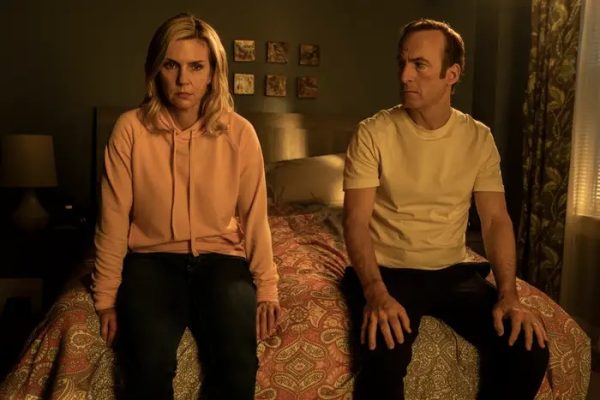
There are some recent shows that managed pretty satisfying final seasons, Succession comes to mind, as does Better Call Saul. And while you might attribute those successes to the show creators, I also think it’s due in no small part to a small core cast of characters carrying the shows. The bench isn’t nearly as deep, but the characters are given sufficient time for satisfying storytelling.
We have spent the last decade celebrating TV that is “big.” We wanted bigger worlds, bigger stakes, and massive ensembles that felt like entire civilizations. But we forgot that the bigger the balloon gets, the harder it is to deflate it safely without it popping in our faces.
If showrunners want to avoid the curse of the disastrous final season, they need to stop building empires and start building relationships. They need to look at their call sheets, channel their inner Jerry Maguire, and realize that the secret to a timeless ending isn’t more spectacle; it’s more care. And care requires time.
If you want a final season that lands with a punch rather than a whimper, start with fewer characters.
Anghus Houvouras