Dead Man’s Shoes, 2004.
Directed by Shane Meadows.
Starring Paddy Considine, Gary Stretch, Toby Kebbell, Stuart Wolfenden, Emily Aston, Neil Bell, and Paul Sadot.
SYNOPSIS:
A disaffected soldier returns to his hometown to get even with the thugs who brutalized his mentally challenged brother years ago.
One thing that British cinema has always done well is the gritty revenge thriller, and the mention of those three words in a room full of cinephiles will usually bring on a series of quotes from Get Carter or possibly The Long Good Friday (because everybody has at least one Michael Caine or Bob Hoskins impression in them). Shane Meadows’ 2004 film Dead Man’s Shoes continues the tradition set by those previously mentioned movies and is often cited as one of the 21st century’s best examples of hardened British filmmaking, although it isn’t as quotable.
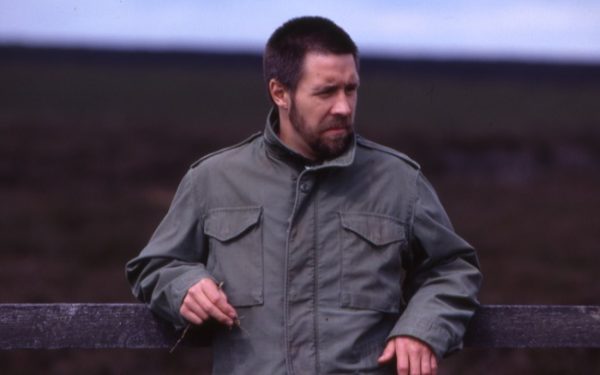
Paddy Considine stars as Richard, a soldier returning to his hometown of Matlock in the Peak District after a stint in the army, but instead of connecting with family and friends he is living rough in a barn on an abandoned farm. It turns out Richard isn’t back to pick up his previous life but is there to get revenge on the gang of drug dealers who tormented and abused his mentally challenged younger brother Anthony (Toby Kebbell), picking off each thug using fear and intimidation tactics until Richard delivers his ultimate blow.
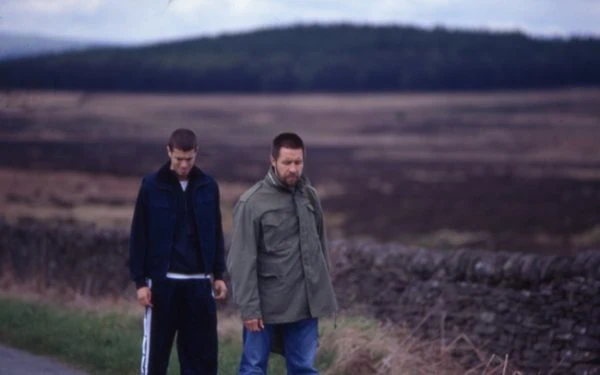
Dead Man’s Shoes is a fairly simple premise of a man getting revenge for the treatment of his brother but Shane Meadows structures the story like a horror movie, using a mixture of flashbacks and present-day narratives to paint a bigger picture than what we are initially presented with. Combine this with a natural kitchen sink-style of filming, some obvious ad-libbing from the actors and the sense of impending doom that permeates every scene and Dead Man’s Shoes offers up a much more intense presentation of British life than anything Guy Ritchie has come up with before or since.
Centred around a commanding performance from Paddy Considine, who also co-wrote the film, it is his presence that provides most of that intensity, making Richard flip from making pleasantries to snarling assassin at the drop of a hat. Richard is clearly not a nice guy but he is doing what he is doing because he loved his brother, and even though he confesses that Anthony’s condition was embarrassing for him to deal with the movie still has a moral ambiguity about it, because despite Richard’s actions the gang of thugs are worse.
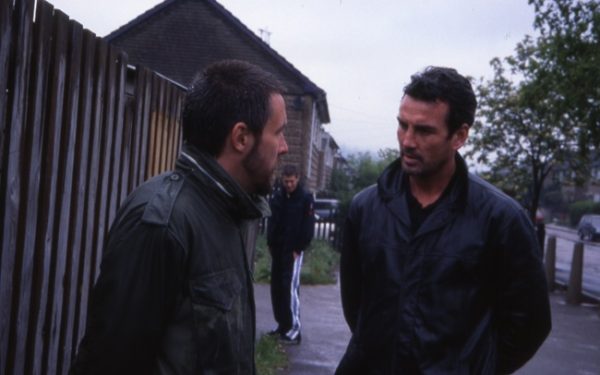
Led by the fearsome Sonny (Gary Stretch), the gang are the usual band of no-hoper misfits who sell drugs, take drugs and generally cause mayhem for their own amusement, and although the movie has its comedy elements and could easily have crossed over into parody – the back-and-forth between gang members Tuff (Paul Sadot) and Soz (Neil Bell) as they read out articles from porn magazines whilst they get high is hilarious and could have come straight out of a sitcom – it properly clicks into place when Sonny and Richard have their first confrontation. The dialogue is minimal, the framing is perfect and Considine and Stretch metaphorically circle each other to size the other one up, although with Richard it doesn’t matter how Sonny reacts as he is coming for him anyway. Sonny is clearly more bothered by Richard than Richard is by him, and the exchange of threats and cast-iron eye contact between the two actors is mesmerising to watch. Dead Man’s Shoes may get nastier and more graphically violent after that scene, but it never gets as intense or threatening.
With comparisons to Taxi Driver and driven by obvious Western influences, Dead Man’s Shoes is not an original idea by any stretch of the imagination but it is a great example of ‘it’s not the material but what you do with it’. Shane Meadows’ direction keeps things moving along and the movie never really slows down or stops to take a breath, only losing little snippets of momentum here and there when the actors are clearly improvising their dialogue, but that style feels natural and any attempt to polish it up would no doubt have blunted the edge a little bit.
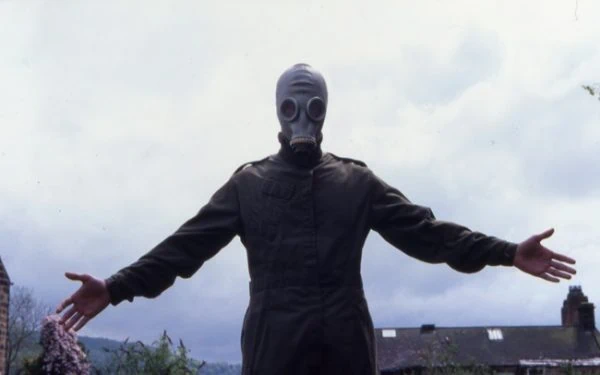
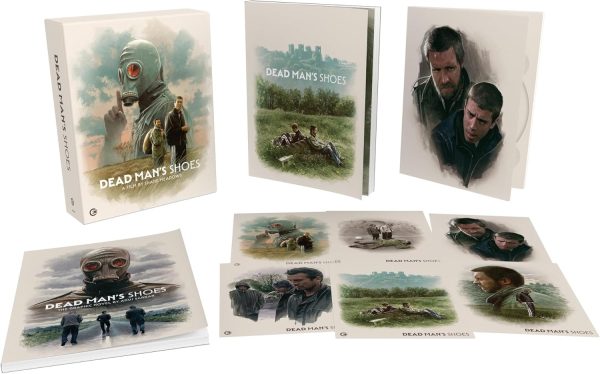
For further information on how it was made, you can check out the special features on the disc, as Second Sight have dug deep and filled it up with several cast and crew interviews, including Gary Stretch, Toby Kebbell and Shane Meadows with producer Mark Herbert. There are also new audio commentaries with Shane Meadows and Mark Herbert, and film critics Andrew Graves and Jon Towlson, plus an archive (and very giggly) commentary with Shane Meadows, Mark Herbert and Paddy Considine, deleted scenes, music video and Northern Soul, a short film by Shane Meadows. This being Second Sight, it all comes housed in a rigid slipcase with wonderful new artwork by Krishna Shenoi, art cards, a Dead Man’s Shoes graphic novel and a 120-page book of essays and writings, so yet again you are getting a high quality package stuffed with extras that will take a while to sift through.
With modern violent British thrillers like Paul Andrew Williams’ Bull clearly influenced by this movie, a definitive HD edition has been a long time coming but Second Sight have delivered the goods once again, and viewing it over 20 years since it first came out it is safe to say that Dead Man’s Shoes is still a powerful and moving experience as it deals with themes of guilt, revenge, mental health and social constructs, although it is not necessarily as disturbing as it may have seemed when it originally came out.
Flickering Myth Rating – Film: ★ ★ ★ ★ / Movie: ★ ★ ★ ★
Chris Ward