Adam Page revisits Lucio Fulci’s The Beyond…
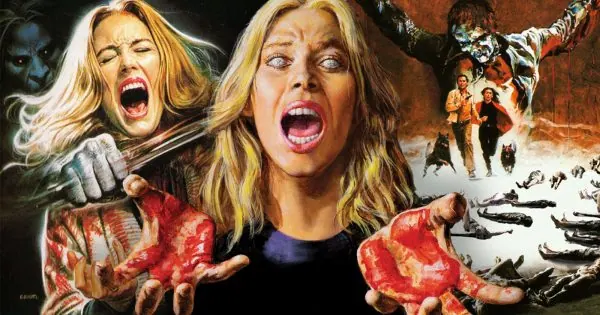
And you will face the sea of darkness, and all therein that may be explored.
Two people walk down a flight of stairs in a hospital basement and come out somewhere they can’t possibly be. It’s not the hospital, or the hotel they fled. It’s not Louisiana, not Earth, not anywhere with a postcode or a gift shop. A grey plain under a grey sky, bodies heaped like driftwood after a bad tide, dust settling on everything like ash from a cigarette nobody bothered to flick. They turn, their eyes go milky-white. And then they are just gone, swallowed up by the picture, and a voice tells you that you will face the sea of darkness, and the music swells, and the movie ends, and you sit there with your drink going warm thinking: what the fuck was that?
That was Lucio Fulci’s The Beyond, from 1981. And forty-some years on, people are still sitting there thinking the same thing, which, I’m going to argue, is the single greatest compliment you can pay it.
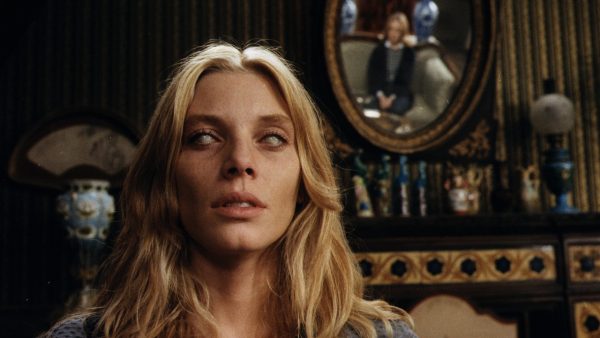
Full disclosure time. The first time I saw it, I was much too young and much too stupid and too badly lit by a cathode-ray tube, and I spent ninety minutes doing what you’re supposed to do with horror movies, and that’s keep score. What are the rules? Who’s the monster? Why is the blind woman’s dog all of a sudden eating her throat? Why does the architect fall off a ladder and lie there, conveniently paralysed, while a tidal wave of spiders eat his face with the urgency of a long lunch? Why does nobody in Louisiana seem to have heard of a telephone, a locksmith, or the very basic principle of never going into the basement? I came out of it hungry, confused, vaguely insulted, and checking every room in the house for spiders.
The charge sheet against this movie hasn’t changed much since. It’s incoherent. It’s a string of gory set-pieces held together with spit and Fabio Frizzi. The plot is a coat-hanger with nothing hanging on it. The dubbing sounds like a group of hostages reading a ransom note. All true, by the way. I’m sure not going to tell you the sceptics are wrong about what’s up there on the screen. But I am going to tell you they’re wrong about what it means, that they walked into a church and complained there’s no menu.
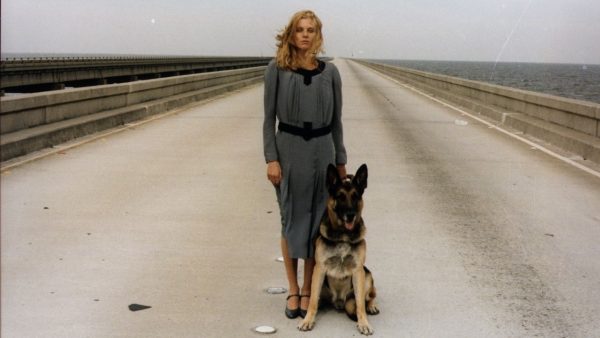
Okay, the plot, such as it is. Let’s lay it out and you can judge for yourself. To begin, it’s 1927, a hotel on the edge of the bayou. A painter named Schweick is working on a canvas of a dead grey landscape when a lynch mob comes up the stairs with chains and torches, beats him, nails him to the cellar wall and throws quicklime on his face. He has been called a warlock. Nobody explains what that means here. Nobody ever will.
Then it’s 1981. A New York woman named Liza, Catriona MacColl doing brilliant work with a script that gives her nothing to hold on to, inherits the hotel and decides to fix it up, as Americans with inheritances do. A plumber goes down to the flooded cellar and gets his eye pushed out by something in the wall. A blind woman called Emily turns up on an empty highway, her eyes the colour of skimmed milk, with a dog and a warning. A doctor, played by David Warbeck, all square-jaw, chain-smoking and with all the curiosity of a brick, wanders through it all being told things and doing nothing about them. There is a book, The Book of Eibon, which appears, disappears, reappears as a different book. There’s a hotel built on one of the seven gates of Hell. You’re told all of this. It doesn’t help.
And then the bodies. Acid in the morgue, a face dissolving into pink foam while a little girl watches. A nail through the back of a housekeeper’s skull, the eye popping forward on its stalk. The dog. The spiders. The zombies in the hospital, shuffling around, more like bad news than predators. A child shot through the head by the hero, which is the sort of thing other movies build to and this one just lets happen.
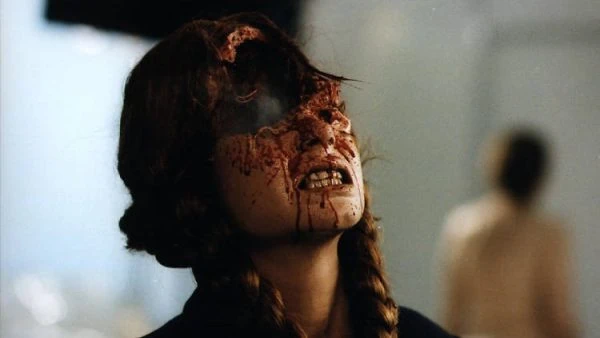
Now, a regular horror movie is a recipe. It sets up the rules, raises the stakes, pays off the setup. The Beyond treats that recipe like a drunk sous chef would: glances at it, laughs, then does what he wants. The Book of Eibon solves nothing. The hero’s science explains nothing. The hotel’s history, the gate and curse, the painter, none of it resolves into a mechanism you can fully work out. Scenes don’t lead to scenes; they just sit alongside each other, steaming and indifferent, waiting.
The usual explanation is money. Italian genre cinema in 1981 ran on pre-sales, foreign distributors wanted zombies after Zombi 2 made a killing, so zombies were bolted on. Shooting was fast and cheap, with scripts rewritten on the fly. Fine, all plausibly true. But accident doesn’t explain the consistency of the thing, the way every scene refuses meaning in exactly the same key. Sloppy movies are sloppy in random directions. This one is sloppy like a fugue state.
Fulci was a grumpy, brilliant, chronically underestimated man who had spent decades grinding out comedies, westerns and gialli for an industry that treated directors as annoying necessities, and he described The Beyond as an “absolute film.” The gist, as he explained in interviews, was that he wanted something stripped of plot, a movie made of pure horror, something that didn’t need to explain itself. People quote this and smirk. Of course he’d say that, they chuckle, the man was covering for a broken script. Every chef who burns the risotto calls it crispy. And maybe so. But look at where the movie usually gets filed, and you’ll see the problem.
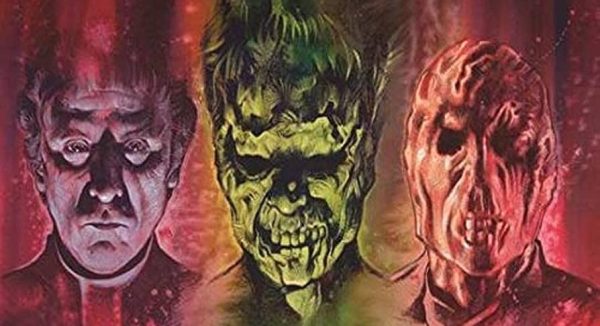
It sits in the middle of what fans call the Gates of Hell trilogy, between City of the Living Dead and The House by the Cemetery, all three filmed by Fulci in around eighteen months, all three soaked in Frizzi synths and rot and fog. And around them, the great Italian Zombie gold rush: Umberto Lenzi’s Nightmare City with its machete-wielding, airport-storming radioactive lunatics; Bruno Mattei’s Hell of the Living Dead, padding the movie out with stock nature footage; Andrea Bianchi’s Burial Ground, which has a twenty-five-year-old man playing a child and is, trust me on this, even worse than you’re imagining. These are movies about appetite. Zombies come, zombies eat, survivors run, sometimes there’s a helicopter. Cheap, loud, and functional. It’s basically fast food, and I’ve eaten a lot of fast food at 3am and don’t regret a bite, but nobody is going to mistake it for a meal with a point of view.
Put The Beyond next to those movies and the zombies are the least interesting thing in it. They turn up late, barely threaten anybody, and mostly stand around in the hospital looking like extras who have wandered in from some other production. And I suppose, in the commercial sense, they were. The movie doesn’t care about them, it cares about the eye. It cares about thresholds, doors, stairs, basements, the nightmare geometry of a building that keeps opening onto places it shouldn’t. It cares about a painting.
That’s the tell. The zombie movies of 1980 are about the body as food. The Beyond is about the world as a picture somebody else is painting, and you are inside it, and the frame is closing. It’s more metaphysics with a meat thermometer stuck in it than it is a genre exercise. And to understand where it actually came from you have to stop looking at the drive-in and start looking at Paris in the twenties, and a bunch of very angry young men with a razor and a theory.
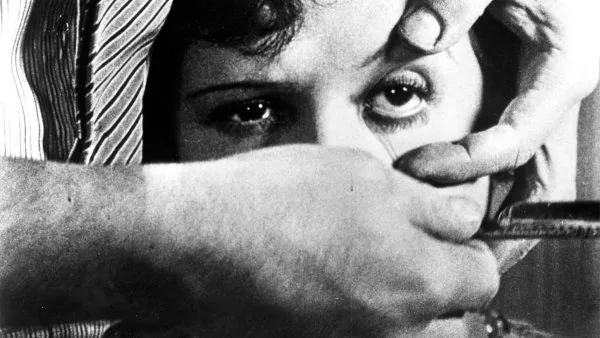
In 1929, Luis Buñuel stood on a balcony sharpening a razor and looking at the moon, then sliced a woman’s eye open. Or, if we’re being accurate, a calf’s eye, in close-up, while a thin cloud cuts across the moon in a cutaway. Un Chien Andalou, made with Salvador Dalí, sixteen minutes long and still the best way to make a room full of film students go very quiet. The two of them built it from their dreams with one rule: nothing that could be rationally explained gets in. Ants pour out of a hand. A man drags two dead donkeys and priests. Title cards announce time jumps that mean absolutely nothing. It’s a deliberate attack on coherence, and on the bourgeois appetite for the thing to add up.
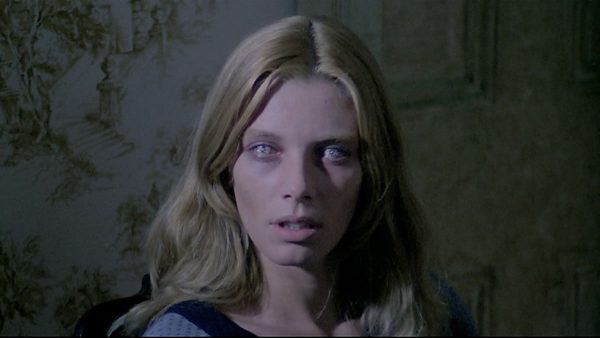
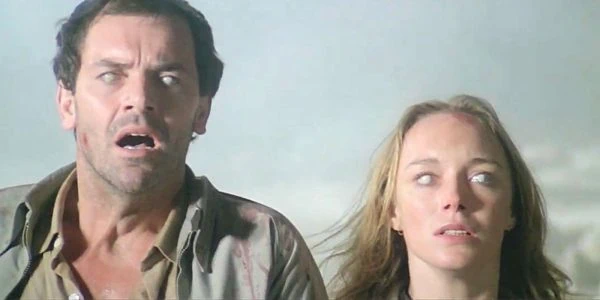
Now watch The Beyond’s eyes. Joe the plumber, eye gouged in the cellar. Martha the housekeeper, nail driven through her skull until the eyeball bursts forwards. Emily’s blank white stare, a seer who is seeing nothing in this world. The spiders going for the face. That last shot, with two living people and their pupils bleached out of existence. Fulci keeps slicing the eye like he’s paying a debt. And the big joke, a vicious and surrealist joke, is that it’s our eye he’s after. The movie’s whole strategy is to make the act of watching unreliable, to refuse the watcher the comfort of a coherent view. You don’t watch The Beyond so much as you get your vision taken off you, one wet set-piece at a time.
Buñuel kept at this his whole life, with his later movies getting even closer. The Exterminating Angel, for instance. Dinner guests who simply can’t leave a room, for no reason, for days. No curse explained, no door locked. Just a threshold that can’t be crossed. Remind you of any hotels?
Then there’s Artaud. Antonin Artaud, poet, actor, lunatic in the old and honourable sense, a man who spent years in asylums and wrote like his skin was on inside out. He wanted a Theatre of Cruelty, not cruelty as sadism exactly, but as rigour and performance that bypassed the mind and hit the nervous system like a fever. He argued that theatre should act on an audience the way a plague acts on a city: dissolving order, revealing the latent horror under civic life. He wrote a screenplay, The Seashell and the Clergyman, that Germaine Dulac directed in 1928, and he hated the result, which is very Artaud. But his ideas were the point: an art of sensations and images instead of plot and psychology, an art that wounds.
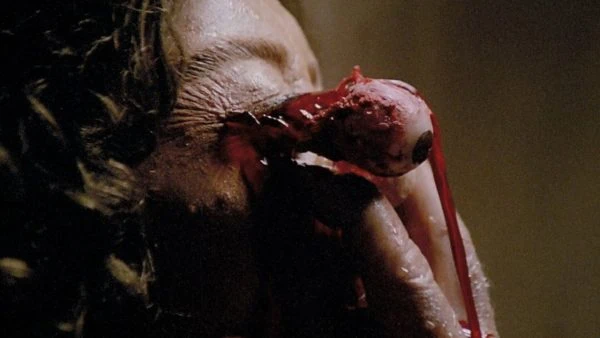
Fulci, by the way, was very well-read. He trained in medicine before movies, wrote criticism, knew his Artaud. When he talks about an absolute film, he isn’t making excuses; he’s naming a tradition. The Beyond is a Theatre of Cruelty with a VHS distribution deal. It does just what Artaud demanded: takes away the narrative contract, replaces character with sensation, and works on your nervous system. The acid scene doesn’t mean anything, it just happens to you, slowly, the foam rising while a small girl stands in the doorway and the camera refuses to cut. You feel it in your back teeth. And that’s why the zombie-cycle comparison is a category error. Lenzi wants to frighten you. Fulci wants to dissolve you.
But we can’t really talk about this without walking a few doors down to Dario Argento’s place, because in 1980, he’d already cooked something on the same stove. Inferno. The middle chapter of his Three Mothers, sequel to Suspiria. An alchemist-architect named Varelli builds three houses for three ancient witches. One in Freiburg, one in Rome, one in New York, and the buildings themselves are the horror. They breathe, hide rooms behind rooms, have a flooded ballroom under the floorboards where a young woman dives after a dropped key and finds a corpse drifting up at her through the green water. And that scene alone is worth the price of a lifetime of bad decisions.
Inferno is also, famously, incoherent. Characters wander in and die. The supposed hero, Mark, has all the narrative agency of a coat hanging up. Plot threads are picked up and dropped. Keith Emerson’s score goes full on prog-rock Verdi. The finale reveals the witch as Death herself, the building burns down and you leave with the sense of having been in an apartment block designed by a migraine.
So why isn’t The Beyond just Fulci knocking off Argento? Because they’re doing different things with the same broken map. Argento is an aesthete. His nightmare architecture is all jewelled, soaked in impossible blues and reds by Romano Albani. His incoherence is ornamental, with the story falling apart so the design can take over, so that space and colour become the narrative. It’s baroque and operatic. You’re overwhelmed by too much, like those strange people who put gold leaf on the gold leaf.
Fulci is a peasant by comparison, and I mean that as praise. The photography by Sergio Salvati is gorgeous, all bayou haze and dead light, but the movie’s sensibility is muddier and wetter, closer to the body. Where Argento’s buildings are puzzles, Fulci’s hotel is a wound. It doesn’t hide secret rooms, it leaks. The basement floods. Walls bleed. That cellar is less a hidden chamber than an infected tooth. Argento’s incoherence dazzles you while Fulci’s erodes. One is a cathedral built by a lunatic and the other is the cathedral after the plague, the pews filled with the dead.
And the important part is that Inferno still believes in an answer. There’s a mother at the centre of the maze. She has a name and a face, with a skull under the face. Hunt far enough and you find the source. The Beyond has no centre. There’s no Mother of Darkness waiting in the basement, no Varelli with a book that tells you the rules. Schweick the painter is killed in the first ten minutes. The gate just is. Evil here isn’t a person or even a force; it’s just a place, and the place is wherever you go next. And that brings us back down those stairs.
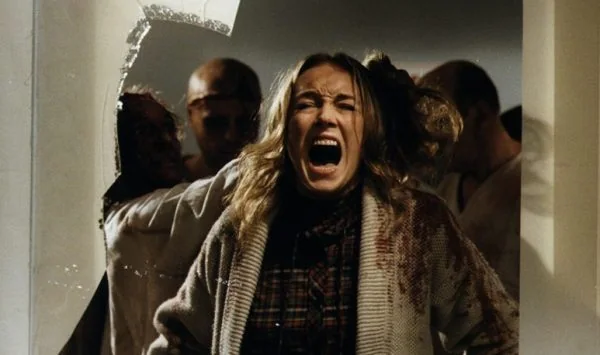
Liza and John flee the hospital with the dead shuffling behind them, a dead child on the floor. They go down to the basement, because where else is there to go in this movie but down, and they come out into the hotel cellar, which is impossible, and then into the grey. The plain from Schweick’s painting. The one we saw him working on in 1927, before the nails and the lime. They’re inside it now, they’ve walked into the canvas. The corpses lie in the dust like a battlefield nobody bothered to clear. The light comes from nowhere, and there’s no horizon. Or, the horizon is all there is. They turn to look at each other, and their eyes have gone white, like Emily’s, like the blind. And then they’re simply erased, and the dust keeps settling.
Horror cinema is built on resolution. Even the bleakest endings usually close: the monster has won, the hero dies, the town burns, a last jump scare jolts you and tells you the story is over. Night of the Living Dead’s Ben is shot and stacked on a fire, and it’s devastating, but it’s an ending. A full stop. The Beyond doesn’t give you that. It gives you an ellipsis that goes on forever, a condition instead of an event. Nobody dies, exactly. They’re absorbed into a permanent elsewhere, fixed in pigment, the living painted into eternity. It’s the most frightening thing in the movie exactly because nothing happens. There’s no blood or teeth. There’s just stillness, and the knowledge that this is where all the doors were leading all along.
And the thing is, that ending only works because the eighty-five minutes before it refused to make sense. If the movie had been coherent, the grey plain would be a twist, a satisfying click of the jigsaw. Instead it’s the logical end of a movie with no logic. The place you arrive when every path has been cut off from cause and consequence, and every door opens onto the wrong room. The incoherence is the road to the ending, and Fulci spent the whole movie dismantling your ability to make meaning, then she showed you what’s left when meaning goes. Dust. Grey. Eternity. Frizzi’s choir rising like the tide coming in over a bay where nothing lives.
I think we’ve all been to places like that. I don’t mean literally, I’m not that far gone. But late nights in a city where you don’t speak the language, hours past the last train, the bars are shuttered and the streets are empty and the jet lag is curdling into something like dread. For a moment the world goes flat and grey and strange and you understand that the map in your pocket is just a lie you told yourself to get through the day. That everything you thought made sense was just a frame around the void. Then the sun comes up, someone sells you a coffee and you forget. But Fulci doesn’t let you forget. He leaves you on the plain.
So no, The Beyond doesn’t make sense. Never did, never will, and thank God for it. There are plenty of horror movies that make sense, tidy little machines that take your money and return your anxieties neatly folded. This one is that other thing: the dream you can’t shake off, the meal you remember years later, the door you shouldn’t have opened and keep opening anyway. Pour yourself something strong, and go back down the stairs.
The sea of darkness is still out there. It’s still waiting. And all therein that may be explored has not, in forty-five years, been explored even a little.
What do you think of The Beyond? Let us know on our social channels @FlickeringMyth…
Adam Page