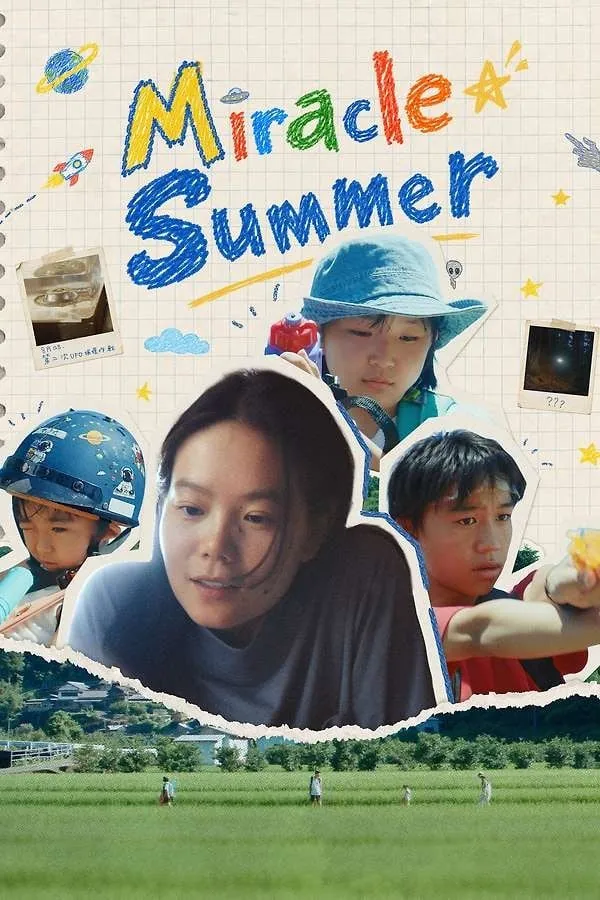
Miracle Summer, 2026.
Directed by Cai Ronglin.
Starring Yamamoto Nairu, Tanioka Mao, Banka Ichiro, and Ueyama Nariaki.
SYNOPSIS:
After a long absence, Mahiro returns to her hometown, where a small miracle quietly stirs memories she had long kept hidden deep within her heart.
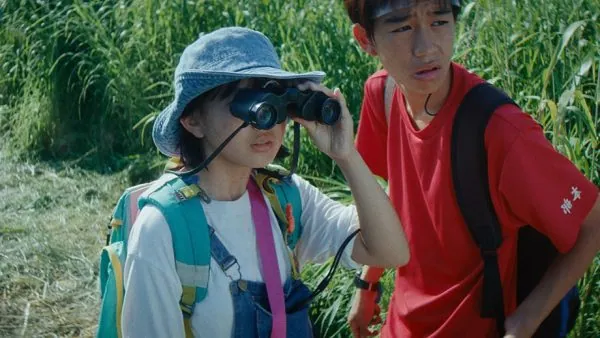
Too often, when we become adults, we seem to forget what it means to have fun. We abandon the joyfulness of youth and instead live in “reality”, a reality where we are consumed by work, and our everyday lives are dictated by it. Miracle Summer, directed by Cai Ronglin, at a brisk 65-minute runtime, explores what it means to recapture that youthfulness. Captured through the lens of Mahiro returning to her hometown, only to get caught up in the antics of three children looking to capture a UFO. The final product is a hopeful and charming directorial debut.
From the outset, the film’s greatest strength is on full display through its stunning cinematography by Peiyuan Li. The film is striking, from a shot of Mahiro to her parents’ home, with the vibrant orange sunset in the background adding layers to the frame. The filmic beauty continues as the film progresses, especially when the children begin searching for the UFO. There is a youthful energy to the framing, creating a sense of wonder from locations that, for these characters, are an everyday part of life.
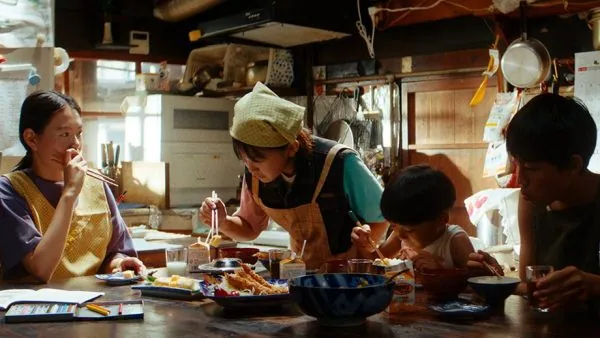
Japan, as a country, can bring out such joy and youthful energy in people; I know it brought that out in me. Within a few moments, we understand our lead’s mindset. Mahiro has become accustomed to reality, so she ignores the cheerful train station jingles and posters advertising a festival. She is a city-dweller who has lost a sense of joy, drained by the monotony of everyday life. So, when she returns home and finds that the children have invaded her old childhood room for their UFO investigation, it is little more than an annoyance to her.
It is through these children that the film truly blossoms. The on-screen text used to display the progress of their mission resembles the handwriting that would be present in a child’s notebook. Capturing the wacky adventures we create in our youth to find joy and excitement. Throughout the film, the audience is left wondering whether the aliens are real. However, whether the aliens exist or not is ultimately irrelevant to the film’s message. To the children, they are real, and that is all that matters. They become a symbol of youth itself, and watching Mahiro reclaim that youth alongside the children as they search for the aliens is genuinely heartwarming.

Front and centre, Nairu Yamamoto is truly excellent as Mahiro, delivering a subtle and nuanced performance. Watching her evolve from someone devoid of joy into someone who rediscovers childhood joy is utterly captivating. Even something as simple as her smile becomes infectious. The child performances are equally incredible and are fundamental to the film’s success. Mao Tanioka, Ichiro Banka, and Nariaki Ueyama are central to Mahiro’s arc, and their youthful energy shines through in every scene. Their attempts to capture the UFO are wonderfully whimsical and lead to some of the film’s most gleeful moments.
Surprisingly, this is a directorial debut, as Cai Ronglin feels like a filmmaker with far more experience. That experience shines through in the editing, and it is even more surprising that he also serves as the film’s editor. At just 65 minutes, the film flies by and never overstays its welcome. This results in a final product that utilises every minute to perfection and has a truly impactful message.
Miracle Summer is a truly joyful and wonderful film about recapturing the childhood joy that we seem to lose as we become adults. The film showcases that we do not actually lose that sensation; rather, it is merely repressed by the pressures and circumstances of adulthood. It simply takes following our hearts to unlock that joy again.
Flickering Myth Rating – Film: ★ ★ ★ ★ / Movie: ★ ★ ★ ★
Robert Ewing
Originally published November 1, 2026. Updated November 2, 2026.