It’s time to take a look back at some essential horror movies of 1986…

Horror is making a comeback right now, with indie horror proving particularly successful thanks to films like Obsession, Iron Lung and Backrooms. It continues a trend from the past decade of new and interesting voices in the genre, delivering low-budget films that prove popular in theatres and on streaming.
Is it a new thing? Not at all. Horror is evergreen with particular purple patches and trends which tend to blow up for a brief period. The current boom of YouTubers turned micro budget breakout directors, really just mirrors those once erstwhile creatives who upgraded from Super 8 shorts, to shooting on video or jumping up to 16 or 35mm film cameras.
So let’s take a big giant, huge, leap (sorry 40 plus readers) back to 1986 to check out the horror landscape then. Here are 10 essential horror movies from 1986…
The Hitcher
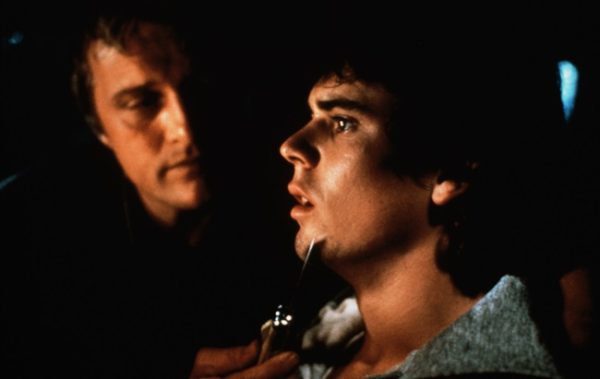
Robert Harmon effectively made the proof of concept for his now cult classic movie, The Hitcher, with China Lake. The brilliant short film featured Charles Napier as a psychopathic bike cop terrorising anyone he deemed to have offended him. Sure, he sounds like the wet dream hero of a modern-day keyboard warrior, but the simple concept would be mirrored somewhat when Harmon took on Eric Red’s twisted hitchhiker horror script for his first feature.
This time it’s Rutger Hauer doing a great job of terrorising C Thomas Howell, and anyone else he so fancies, with an underlying and nightmarish feel of dark fairytale. Hauer is magnificent, as are C Thomas Howell and Jennifer Jason Leigh. Cinematographer John Seale (Mad Max) makes it all look incredible, well backed by Mark Isham’s atmospheric synth score. Throw in stunts galore and the terrifying unpredictability of Hauer’s performance, and it’s no wonder this has garnered so much cult fandom. The biggest mystery is how Robert Harmon hasn’t come close to living up to this opening swing.
Vamp
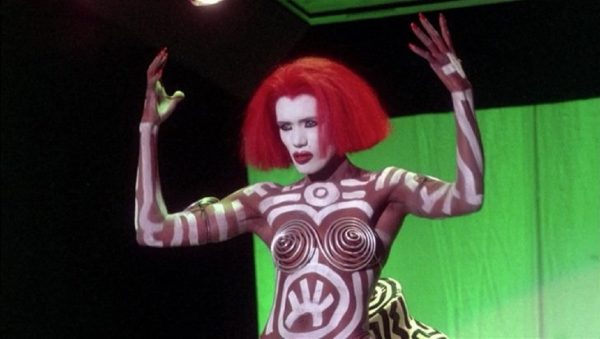
Strange, camp, corny and colourful. Vamp’s distinct and striking use of purples and greens makes it really eye-catching, and the performances are enjoyable. However, the star attraction in Richard Wenk’s cult horror film is Grace Jones.
Jones was no stranger to cinema, with films like View to a Kill and Conan the Destroyer accentuating the wild and fiery image she’d cultivated as a performer. Vamp is a lot of fun and yet still falls just slightly under the radar of mainstream horror fans. Well worth checking out for 80s horror fans who haven’t yet checked this one off.
The Fly
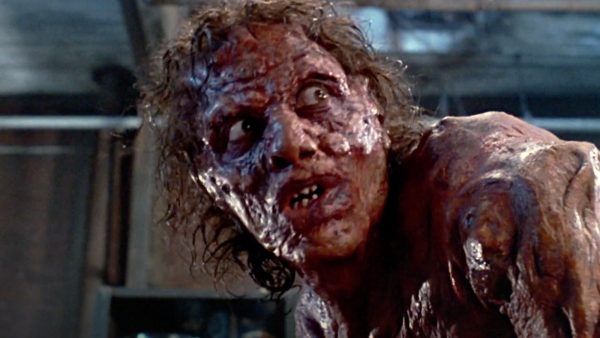
David Cronenberg had firmly established himself as a major voice in horror with his strange and esoteric cinema. On the surface, a remake of a slightly corny 50s creature feature might have seemed left of field for a guy who’d made Videodrome and The Brood, however, the result of Cronenberg’s vision, perfectly in tune with Jeff Goldblum’s performance, created a rarity: the remake that surpassed the original, much like Carpenter’s The Thing.
Cronenberg had already mastered body horror and pushed the envelope even further, to grotesque yet almost dementedly funny levels.
Dead End Drive In
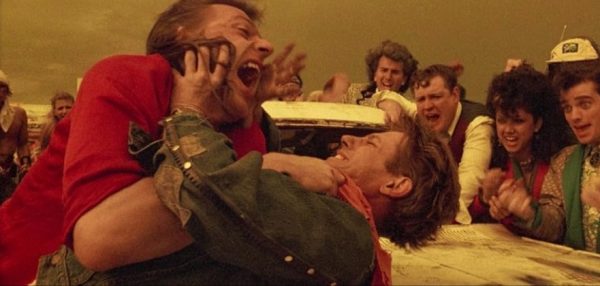
One thing you could say about 80s horror is that there were a lot of derivative pictures. If something worked for someone, chances are it’d work for someone else. Thus we had countless masked slashers to follow in the slipstream of Myers and Vorhees. At the same time though, there were plenty of unique and interesting creative swings.
Dead End Drive In, from Brian Trenchard-Smith, sees a group of young roustabouts lured into and trapped inside a drive-in which becomes a prison. Within the confines, there are small gangs which form, and Carman and Crabs find themselves having to survive the insanity within the prison whilst trying to find a way out. It’s classic Ozploitation horror with shades of cyberpunk and some great visuals. The amalgamation of recognisable elements forms to make something fresh and unique.
Henry: Portrait of a Serial Killer
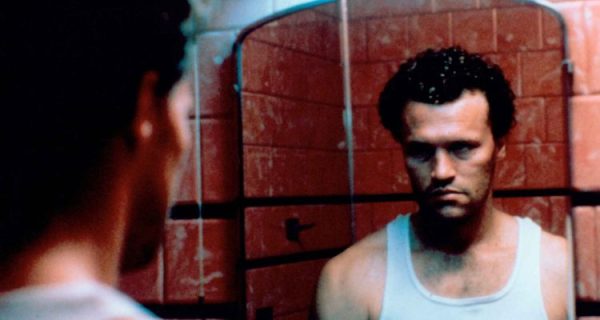
True crime horror adaptations are all the rage now. Stylised approaches or gritty and grounded, there’s plenty of choice. Back in 1986, John McNaughton made Henry: Portrait of a Serial Killer, starring a then-unknown Michael Rooker. It’s rough, cheap (but effectively so), grim and intense.
McNaughton’s film was loosely based on real-life serial killer Henry Lee Lucas. Much like Obsession and Backrooms now, Henry was shot for peanuts. Its initial impact wasn’t quite as huge, but this was a totally different era, long before the internet. Still, Henry started to accrue word of mouth, gaining traction and notoriety on video, and today, is widely considered one of the best indie horror films of its decade. As for Rooker, his performance is chilling.
From Beyond

Stuart Gordon followed the success of Re-Animator, with From Beyond, a dazzling and gruesome horror filled with monstrosities and insane visual effects that maybe even exceeded those in Re-Animator.
Gordon stalwarts Jeffrey Combs and Barbara Crampton returned, and both were in fine form once again. Based on the HP Lovecraft story, it’s probably the best adaptation of the iconic genre writer’s work. The finale alone is a marvel of 80s body horror practical effects and a film only Gordon could make.
Blue Velvet
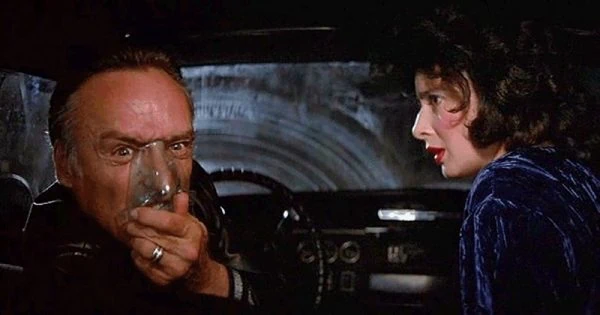
Whilst David Lynch never did full-blown standalone horror, he often infused his works with sprinklings (both subtle and liberal) of horror. Blue Velvet tends to glide beautifully between genres, but the presence of Dennis Hopper continuously pulls this violently into terror.
Hopper doesn’t hold back as the utterly deranged Frank, gassed up to the max and violently unpredictable. It’s vintage Lynch, drifting seamlessly between dreamlike depictions of a vintage suburban America and a nightmarish underbelly of oddities, headed up by the maniacal Hopper. Kyle MacLachlan was always perfect, a straight-laced, stoic foil to get thrust into a Lynch universe, along with girl-next-door Laura Dern and Isabella Rossellini, who is sensational. It’s a masterpiece.
Night of the Creeps
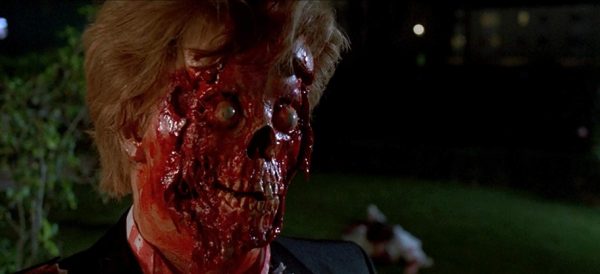
Frat boy comedy turned body-snatchers-styled horror is the order of the day with Night of the Creeps. It’s a great fusion of horror and comedy with gleefully gruesome practical effects. This is very much, and in the best possible way, of its time. A rollicking product of 80s horror.
Fred Dekker, who conjured the story for cult favourite House the previous year and would later direct the enjoyable Monster Squad, is at the helm of Night of the Creeps, and he keeps the film zipping along nicely. Then there’s genre royalty in the form of Tom Atkins, who adds his horror gravitas to proceedings.
Texas Chainsaw Massacre 2
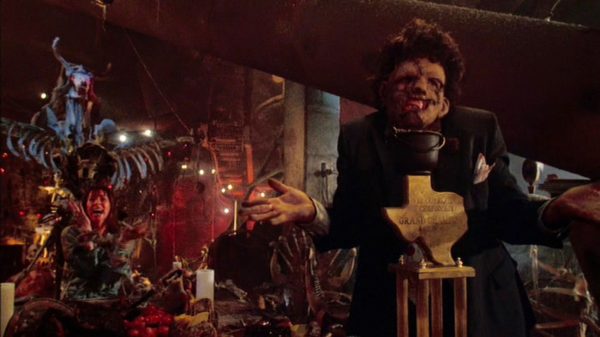
We have another slice of Dennis Hopper mayhem here and a perfect example of a film being slowly reappraised over the years. The original Texas Chain Saw Massacre was controversial, instantly iconic but regarded in high stead among horror fans of the age and even begrudgingly appreciated by dismissive critics of the genre who couldn’t deny its cultural impact on cinema. The first sequel, more than a decade later, felt somewhat cynical and weirdly followed the path laid out by the Freddy Krueger sequels, in trying to make the horror icon of the piece a bit more merchandisable.
Here’s the thing, though: in time, the second Chainsaw movie has seen its stock rise throughout the physical media era, with plenty of revisionism coming this century. For all its flaws, it’s got a certain crazy, unhinged quality that’s always amplified by having the presence of Hopper. It’s more darkly comedic and, whilst not a patch on the OG, has its own idiosyncracies as well as a sense that director Tobe Hopper is having a blast. It’s as delightfully flawed as many of Cannon’s most iconic films.
Death Powder
This surreal, cyberpunky horror is a forefather for its more infamous follower, Tetsuo: the Iron Man. Shigeru Izumiya’s blistering and super short feature is packed with kinetic energy (albeit not as much as Tetsuo), surrealism, and striking visuals. It’s rough, guerrilla filmmaking with a mix of cheap film stock and sequences shot on video. The basic premise is simple: a man and woman enter a warehouse that will change their minds and lives forever.
There’s something wildly creative and untethered about Izumiya’s work here. It was his sophomore movie as a director and would prove to be his last, leaving a sense of what-if for a director who might have gathered more of a following with some honing and some momentum.
SEE ALSO: The Essential Action Movies of 1986
What’s your favourite horror from 1986? Let us know on our social channels @FlickeringMyth…
Tom Jolliffe
Originally published June 21, 2026. Updated July 3, 2026.