Jack Gayer on the backstory behind the 1988 cult classic Hell Comes to Frogtown…
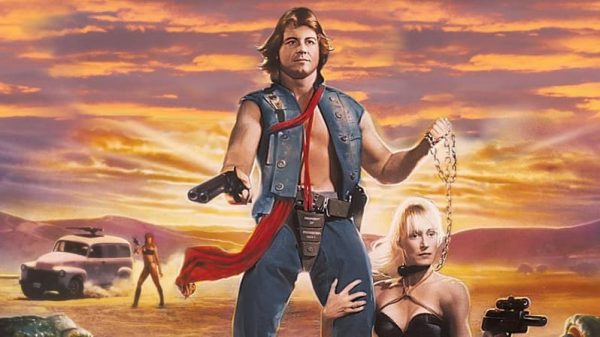
“It’s the end of the 20th century, and mankind has blown its wad. The fate of humanity rests in the groin of one man.” This tasteful, informative line, courtesy of the trailer, spells out the tone and plot of Hell Comes to Frogtown (1988). Sure, it could have also mentioned there are goddamn frog monsters populating the film, but if you’re watching the trailer, you should be able to piece that together yourself. Ideally, you go into the movie blind.
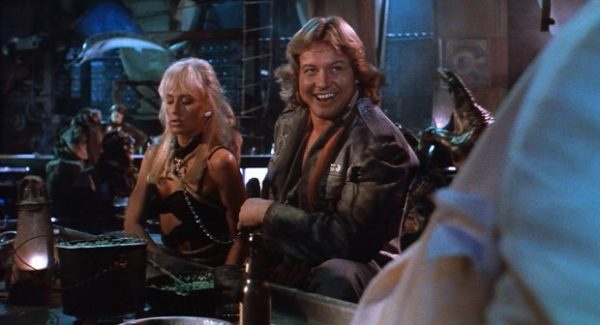
The first thing we learn about Sam Hell, our main character, in Hell Comes to Frogtown, is that he’s a rapist. It’s your classic “drown the cat” moment in your script. Instead of making your main character likable, “saving the cat,” it’s immediately established the hero is a piece of shit. But he’s not just a predator; he’s also dumb, clumsy, and more than a little cowardly. He can also be sweet on occasion. Sam is played by the late “Rowdy” Roddy Piper, and while he’s not a great actor, he at least tries, which is more than can be said about other athletes-turned-actors.
The film “borrows” liberally from Escape from New York (1981), Mad Max (1979), and Planet of the Apes (1968), plus what appears to be the plot of a porn film written by someone who should be kept as far away from the amphibian house at the zoo as possible. Frogtown was pitched as the bastard offspring of Mad Max and Planet of the Apes. While we can’t prove the director used the phrase “bastard offspring,” it’s possible it was hard to hear him properly with his tongue wedged so firmly in his cheek. In a bit of self-plagiarism, the main writer of the film, Randall Frakes, did effects for Escape from New York some seven years earlier.
Who saw a script with such a vile main character and a bonkers plot—one so laden with misogyny it may have been underwritten by a forced sterilization clinic—and thought, “Yes! We needed to make this movie yesterday.” It may not surprise you that there are conflicting accounts of what it was like on set. It may not shock you that not everyone working on the film “got it,” was super proud of it (at least at first), or that the film had some oddball creators.
To understand the movie that sounds like something a stoned fourteen-year-old would pitch (you’re not far off), you need to understand the writer. You probably haven’t heard of the name Randall Frakes, which, admittedly, sounds like a poorly thought-out alias. For years, he’s been a frequent collaborator of James Cameron, often doing uncredited work as a story consultant. Including, Frakes claims, some story consulting on Avatar (2009). Frakes says he was asked to contribute to The Terminator’s (1984) script but felt his vision and Cameron’s clashed, so he respectfully bowed out. Albeit without telling the director why. Because… reasons. Frakes would, however, help write the novelization of The Terminator. He says Cameron even wanted to contribute to Hell Comes to Frogtown. When the studio balked at paying for a bigger opening, Cameron offered to lend them the money. An offer they turned down.
In the oral history, “HDTGM: A Conversation With Randall Frakes, Writer/Producer Of ‘Hell Comes To Frogtown,'” Frakes gives a frank account of his experience on this seminal sci-fi film. Not surprisingly, he talks about what an early inspiration the Planet of the Apes was. Also unsurprising is his last editing experiment, a short of a “straight-laced girl” seemingly masturbating on camera. His friends were psyched that he managed to get such a girl to “touch herself.” What is surprising is that he was only 14 when he filmed this. Well, not surprising that this is what a 14-year-old would come up with, but surprising that a 14-year-old did this without someone stopping him. And surprising that he may have just blithely admitted to creating quasi-child pornography, as the body double was also presumably a sophomore like her straight-laced counterpart. It’s also unsurprising that this is the man who would go on to write the horny frog movie.
Elsewhere in the interview, he mentions that while working as a journalist in the army, he almost got his throat slit by a fellow soldier. His takeaway from this experience was that the world needs truth tellers and investigative journalists. However, Frakes reasoned it’d be safer to “tell truths” as a screenwriter. As to what truths he told with Hell Comes to Frogtown? Frogs are filthy animals with libidos that would embarrass dolphins.
Frakes would say that the genesis of Frogtown comes from the director, the late Donald G. Jackson, being on a roll. Jackson had just made several high-earning features and was asked what else he had in the tank. Well, what he had was a “list of characters and situations” for a film he wanted to call “Hell Comes to Frogtown.” What he didn’t have was a story, let alone a script. That’s where Frakes came in. Thus, he tasked Frakes with writing a screenplay. Fortunately, Frakes’s mind is as fertile as Sam Hell’s twins, and he quickly envisioned a story on the spot. Told Jackson he could have a screenplay written in a week. As shocking as it is to imagine this film being written in a week, sometimes the writing muses bestow writers with divine inspiration faster than others. Sometimes there’s a little something extra involved. With the promise of a $500 bonus for turning the screenplay in within a week (and with Jackson sitting next to him to prove he didn’t “cheat”—a great way for art to flourish, no doubt), Frakes got to work.
As hard as it is to believe, Frogtown was supposed to be even hornier. Are we talking about seeing frog dongs à la Howard the Duck (1986)? Sorry, batrachophiles, but no. The original version was supposed to have Sam Hell rubbing one out in a jail cell. According to Frakes, this was meant to show Hell’s complete “disdain for authority” and “his belief in living life to the fullest,” regardless of where he is. Additionally, this was meant to portray the main character as a “loaded pistol, always ready to fire.” A message that is as powerful as it is subtle. It’s also nice to see Frakes trying to return to his cinematic roots of people beating their meat like it owes them money. Alas, as astute viewers will note, there is no scene in the movie where Sam Hell goes to absolute town on himself in front of police officers. Did art die that year? Maybe, maybe.
Frakes says the original screenplay also had a scene where a naked woman is served on a large platter of lettuce. Frakes would say moments like these were “a little over the top,” which makes you wonder what he thinks the rest of the movie is. The writer adds that R.J. Kizer, the studio-appointed co-director (who would essentially sideline Jackson), was “slow as molasses.”
On The New World Pictures Podcast, co-director and seemingly friend to few on set, R.J. Kizer, shared some of his own thoughts on Hell Comes to Frogtown. Kizer says when Jackson described the film to him in their first meeting, the co-director couldn’t make eye contact. Kizer calls Jackson an “odd duck.” And that the story was very derivative. No kidding!
Doing little to dispel the accusations by his co-workers that he was a wet blanket on set, Kizer continues to lambast the production and his co-director. Kizer says they had a guy “not ready” to make a theatrically released film, presumably talking about Jackson. However, Kizer concedes he wasn’t ready for making a bigger film, either. He would go on to do various sound editing work for directors like Christopher Nolan, Tim Burton, Steven Spielberg, and the Farrelly Brothers on some of the biggest films of the last several decades.
In the podcast, Kizer can’t wait to air grievance after grievance over Frogtown. He says “nobody agreed” with what they were making, “the tone…attitude…the theme,” and that it was an “okay cast.” For someone so down-to-earth and jocular before Hell Comes to Frogtown comes up on the podcast, he has few good things to say about the film, the crew, or the cast.
He does drop a bit of trivia: Steve White, the head of New World, wanted Daniel Stern for the Sam Hell role. Stern seemed fairly into the character but didn’t want to wear the weird shit on his junk. A deal breaker for Kizer. Stern would make no mention of this close call with sci-fi greatness in his memoir; he would detail his complicated relationship with Mel Gibson, however.
Kizer says the role came down to Ed Marinaro from Hill Street Blues (1981-1987) and “Rowdy” Roddy Piper, but Kizer argued that Piper was the better choice. Purely from a marketing standpoint. Because nothing says you’re a good fit for a role like “you’re a better marketing commodity.” He also says an acting coach was on set the whole time for Piper. However, despite Kizer’s great respect for Piper, on day two, a producer on the film told Kizer to stop talking to (directing) Piper, as it just “confused” the actor. He makes no mention of Jackson being booted from the set.
What does Jackson think of Frogtown? Thanks to an interview with Trash Times just before the director passed, we have some of the terse words of the esteemed director. For one, he wanted to make it clear that as a Christian, “I never want to associate with people who are not walking on the path to light.” The film’s opening does include a Bible quote, “Be fruitful and multiply,” so you can be assured this film was on that path.
As for where the title “Hell Comes to Frogtown” came from, it’s fairly anticlimactic. Jackson has said that there was a section of Los Angeles known as “Frogtown,” as it was overrun with frogs. Driving by it one day with his actor pal Sam Mann, the friend got the idea for the title of the film. Mann would be Jackson’s top choice for the role of Sam Hell, and Jackson would lament that he didn’t push harder for him.
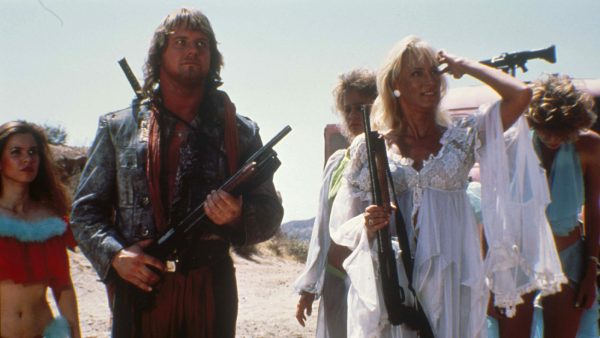
Jackson, someone you might not call “Mr. Personality” based on the interview, also bluntly dismisses some of the actors in the film, as he didn’t cast them personally. He also expresses his frustrations with having creative control taken from him and being banned from the set. He follows this up by indicating he didn’t make too many friends during the editing of the film due to his “flaring temper.”
Jackson also talks about how he tanked his working relationship with New World after a run-in with the art director. Unhappy with the man’s job, Jackson had added some spray-painted graffiti to the set. Speaking of taste, in the interview, he would drop this line: “Actors like Vin Diesel in [sic] Triple XXX are a lot of fun.”
In the article for Yahoo, “Hell Comes to Frogtown Remains a Roddy Piper Oddity 35 Years Later,” they discuss how R.J. Kizer didn’t get along with his co-director, Donald G. Jackson. According to the piece, Frakes claims Kizer neither understood the tone nor had enthusiasm for making the film. While the former is understandable, the latter is borderline unforgivable. The movie is about Mr. Miracle Balls needing to fuck the remaining Earth women after a nuclear holocaust. And there will be giant, freakish-looking frog people. How do you not have enthusiasm for making that picture? Sorry it’s not Angela’s Ashes (1999), guy.
In the oral history, Frakes recounts how Piper wasn’t who Frakes had in mind for Sam Hell, but the studio, New World, fresh off the success of the documentary I Like to Hurt People (1985) about wrestlers, wanted a wrestler as their lead. He adds that he was pleasantly surprised by Piper’s commitment, working with an acting coach and taking the role “super seriously,” and watched him get better and better, turning out to be “charming in the role.”
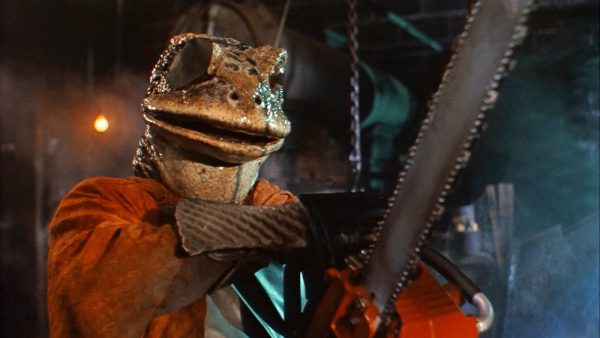
This wouldn’t be the last time the word “charming” was tossed in Piper’s direction. On the pop culture review/summation site, Liz tells Frank, writer Liz Shannon Miller also had kind-ish words to say about Piper’s performance. First, though, Miller goes out of her way to articulate how unfuckable she finds Piper. She goes on to give the caveat/compliment: “He is actually really charming on screen! When he isn’t, you know, raping women.” Not the most winning endorsement, but can the same be said of Sean Connery in Zardoz (1974)? Perhaps not.
Contradicting Frakes’ take, Piper would say in an interview accompanying the film (as reported by Geek Chocolate), “I had not taken any acting lessons. I don’t know if that needs pointing out.” Adding that the director hated him—he doesn’t specify which director, but you can make your own assumptions—and that he was rather embarrassed by his performance in the film.
Shedding a bit of light on this is Kizer’s admission on the New World Pictures Podcast. Kizer acknowledges he’d heard that Piper thought he didn’t like him because Kizer didn’t talk to Piper during filming. Kizer defends this by saying he was ordered not to talk to the star and that he liked him “just fine.”
Piper also admits that he “didn’t think the best job had been done” in regards to his performance. A touching bit of earnestness, somewhat hampered when he later shit on all the movies he ever did.
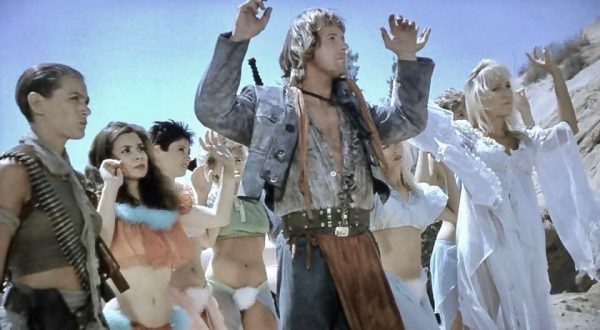
As the film evolved, the budget increased. However, according to the Yahoo article, the expanded budget for the film did not make its way to the special effects, which were handled by Steve Wang, who also created the designs for the nightmare frogs (or sexual fantasy frogs, depending on your kink). Wang would also work on Predator (1987), A Nightmare on Elm Street: The Dream Child (1989), Godzilla (1998), Idle Hands (1999), and Underworld (2003), among other films.
According to “Celebrating the Slimy Thrills of ‘Hell Comes to Frogtown,’” Wang had to make do with $12,000 for all the frog effects, as the production needed to save money for the 19-day shoot. The author of the piece also seems to disagree with Liz, the film reviewer, calling Piper “ruggedly handsome.” Wang is also one of the few people from the movie Jackson mentions liking in his final interview.
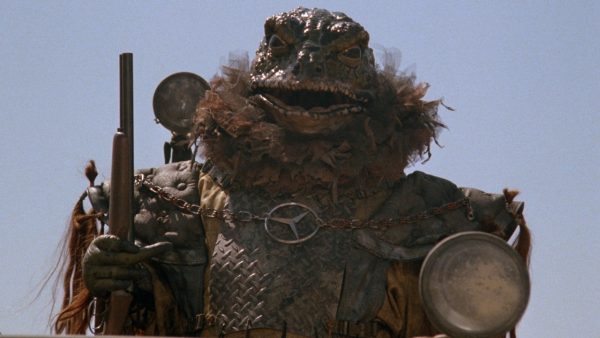
Was the 12k for frog effects money well spent? Maybe. Brian Frank, the actor who played Commander Toty, has said how the costumes could have been “tacky” but were actually fairly “classy,” which is not a word used often in the same sentence as Hell Comes to Frogtown. A movie where the main character sexually assaults a drugged woman, who subsequently—maybe—falls in love with him. Yes, this film is classy with a capital “C.”
The article on Geek Chocolate would recount how Wang wasn’t initially impressed by Piper, calling him a “loud, obnoxious jerk,” but warmed up to the actor, saying Piper was “the sweetest, humblest guy I’ve met.” As to the production? Wang says, “No one took anything seriously on set, they were all trying to have a good time.” Wang seems to have taken his job seriously at least, as the mutant frogs are truly upsetting to look at. Even if their voices are quite… “theatrical.”
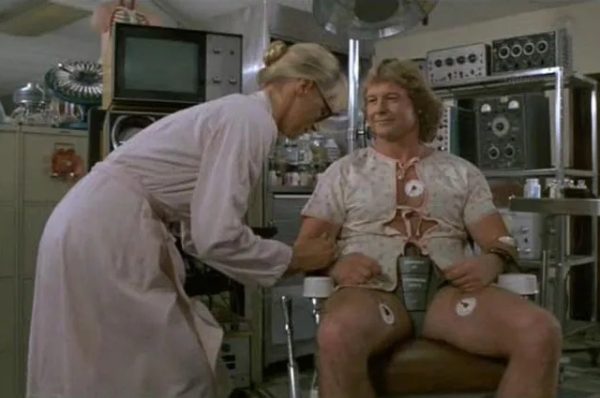
Cult classics are usually not well-received when they’re initially released. Hell Comes to Frogtown was no different. After the first screening, Frakes says a friend came up to him and apologized for how “they screwed up his movie.” A pragmatic Frakes would call the movie a great learning experience, “mostly about what not to do.”
Piper, frowning and bitching his way through his mop of blond hair, plays Sam with just the right amount of hamminess. Despite being seemingly born without a filter, he is surprisingly mum on Frogtown in his memoir, In the Pit with Piper; all he will say on the movie is, “I still to this day claim that it was my evil twin brother who did that movie.”
The film would come out the same year another cult classic starring Piper was released, They Live (1988). Number one at the box office on its first weekend, the first for a wrestler (Piper will proudly note both of these facts in his memoir). Despite being pleased with how They Live did at the box office and his position as the first wrestler to have a number one film, Piper would say in the Geek Chocolate interview, “There is no film I’ve ever done that I’ve liked.” So suck on that, They Live.
The wrestler turned actor was also not initially optimistic about the film. In an interview with Ain’t It Cool News, Piper would say, “I didn’t think anybody would watch the damn thing.” But watch it, they have. His co-star, Sandahl Bergman (Spangle), says in an interview with Pop Geeks that she “had so much fun” doing the movie and frequently hears from people at conventions how much they love it. Further, she attests that Piper would experience something similar.
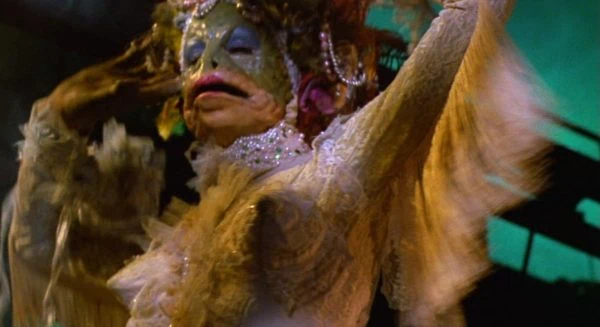
Moreover, on the behind-the-scenes front, Bergman confirms that the “Dance of Three Snakes” didn’t have a choreographer, so she (a former dancer) made up her own dance for this “fun, goofy, stupid movie.” And unlike her dislike of Brigitte Nielsen—from working with her on Conan the Barbarian (1982)—Bergman says she and Piper “got along great.”
Kizer seems to have had a different time with the production; in the New World Podcast, he says they had “nothing but crises all the time.” One of these less-fun experiences was, according to Kizer, when Frakes brought them to an exterior location he thought would make a great shooting spot. He was disabused of using this as a set when he brought Kizer and the director of photography out to the location, which required crossing a field full of “yellowy powder,” which the DP informed him was powdered asbestos.
Troubled sets can still produce great movies. But when you’re starting with a script that was written in a week and has a doofus, reluctant inseminator and rapist as the main character, a film can only be so good. Depending on who you ask, the making of Hell Comes to Frogtown was either a blast or a nightmare. The original director got the Richard Stanley treatment and was eventually kicked off the set of his own movie. The other director wasn’t keen on the material or cast. Andrew Tate would find the film’s sexual politics problematic. “Just promise you won’t be gentle,” says the frog seductress at one point.
When you put that all together, you have an odd-tasting stew. One that has your guests saying not, “what did you put in this?” but “what…did you…put in this?” Discovering the ingredients that produced this strange stew goes a long way toward explaining what the hell you just ate.
Jack Gayer