Tom Jolliffe looks back to the 1975 Academy Awards ceremony, when Francis Ford Coppola had The Godfather: Part II and The Conversation in competition…
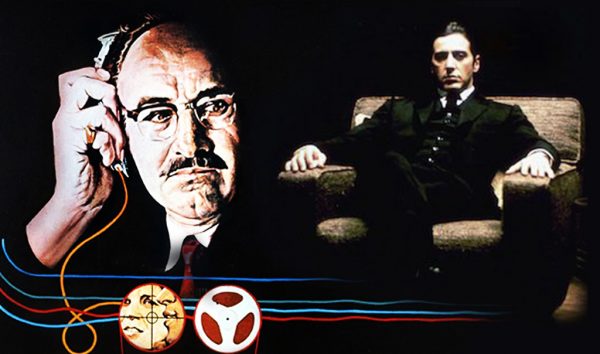
With the Oscars around the corner, now is a good time to look back at the 1975 ceremony. It was a year filled to the brim with exceptional films. Among an array of classic cinema, Chinatown, Lenny, Alice Doesn’t Live Here Anymore, A Woman Under the Influence and Murder on the Orient Express all picked up nods in various categories. The year was certainly strong (with Disaster films also proving very popular) and there were films largely bypassed which might have felt aggrieved.
Francis Ford Coppola had already experienced Oscar joy with The Godfather two years prior. The film won three Oscars, including one for Coppola himself, sharing a writing award with Mario Puzo. For many filmmakers, the Oscars represent the high point of acknowledgement. Coppola made two films in 1974 which were lauded by critics. In it’s own right, the lesser known of these films is perhaps the most interesting.
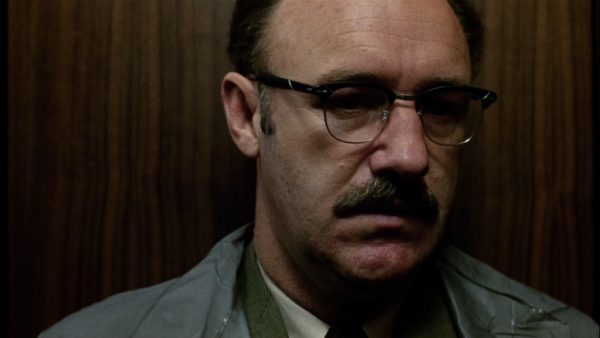
Made between the first two Godfather films, The Conversation was a stripped back thriller that felt like an offcut. Coppola had actors he could call on to fill roles and he had a script that, at least in comparison to his grandiose gangster epics, would be simpler to film (further aided by contemporary setting). The paranoia driven film sees a surveillance specialist (Gene Hackman), with a particular gift for capturing sound through taps, recordings and more. His latest job targets a young man and woman at the behest of the woman’s older husband. Harry Caul has worked for government agencies and transitioned to private enterprise. He’s only interested in the job, doesn’t like questions (to ask or answer) but a previous assignment still haunts him. After delivering those recordings, the people he’d targeted ended up dead. When Caul unwraps every line from his new assignment, getting clarity on every word, it becomes clear (to him) that the man and woman could be in danger. Caul distrusts his employers, becoming wary of them, and collateral damage happens once again, leading Caul to find himself watched.
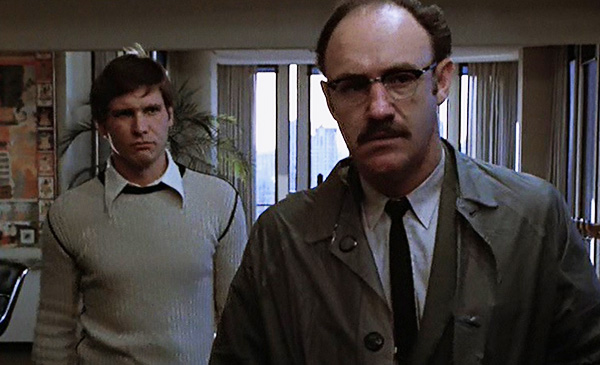
The Conversation is a masterpiece of paranoia cinema. It’s an exercise in pure efficiency and restraint and perhaps one of the most exceptional examples of sound design ever. In any given year, a film garnering three Oscar nominations would probably consider that a great achievement. Indeed, for The Conversation, nods for Best picture, sound (which it honestly should have won) and best screenplay (original) was a good show. In actuality the film was probably still undervalued at the ceremony. The cinematography is superb. Coppola changed up his style, proving his adaptability and creativity early on. It’s a film shot as if constantly via surveillance. Cameras only ever seem to pan if they move and much of it is shot on long lens, with a naturalistic palette, occasionally infiltrated with stray neons and intrusive close ups (from DP’s Bill Butler and Haskell Wexler). Additionally, the left of field jazzy score (David Shire) was unique and an extra layer of unexpected discord to keep us on edge. Perhaps the biggest oversight though, was Gene Hackman being overlooked. He’s immensely good in a role far less reliant on brash, domineering charisma. Caul is one of the most introspective characters Hackman has ever played, and a marked difference to Popeye Doyle a few years prior which was recognised (rightly) by the Academy. An oversight, but given the strength of the year, not wholly glaring.
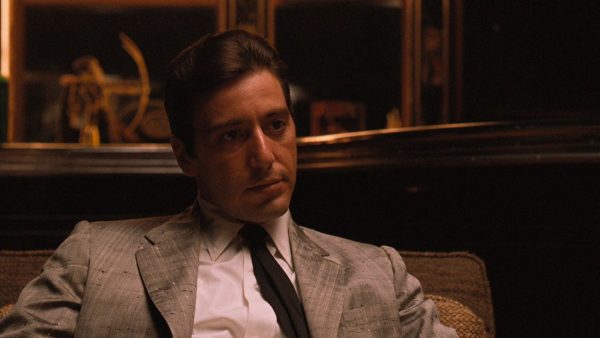
If The Conversation might have been slightly overshadowed, then Coppola’s other masterpiece entry of the year certainly wasn’t going to suffer greatly from any Academy oversights. The film won six Oscars (Best Picture, Director, Supporting actor for De Niro, Score, Adapted Screenplay and Art Direction). It didn’t quite sweep the board. Somewhat surprisingly, Pacino was overlooked, and even then, perhaps the strongest of his direct rivals, Jack Nicholson wasn’t the winner. In fact the winner for best actor was Art Carney (for Harry and Tonto). It felt a left of field choice in any case. Still, there was one genuine oversight, and one of a couple in the short lived career of John Cazale.
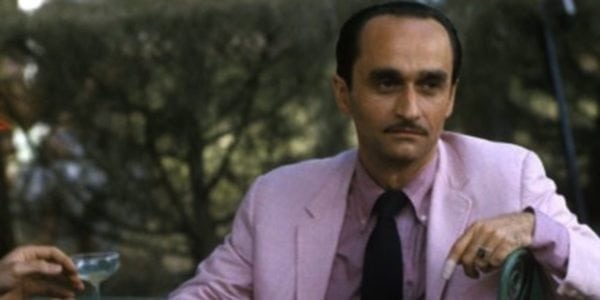
Having also appeared in The Conversation, Cazale was a big part of Coppola’s domineering presence at the 75 awards for sure. Cazale’s cinema career, spanning only a handful of films before his untimely death (shortly after appearing in The Deer Hunter), was exclusively in masterpieces of cinema. The fact Cazale as Fredo, particularly in Part II, was never recognised by the Academy is something of a travesty, and his arc and significance in the second film, combined with his performance, probably should have made him a shoe-in. Just as bad was the following year, where Cazale’s best performance, in Dog Day Afternoon was also overlooked. It happens that in films top heavy with great performances, someone is bound to get unfairly forgotten. Three actors alone were nominated in the best supporting category, for which De Niro took gold. Whilst Michael Strasberg and Michael Gazzo were indeed excellent, Cazale would probably have been more deserving.
SEE ALSO: The Short Lived Maestro of Second Fiddle: John Cazale
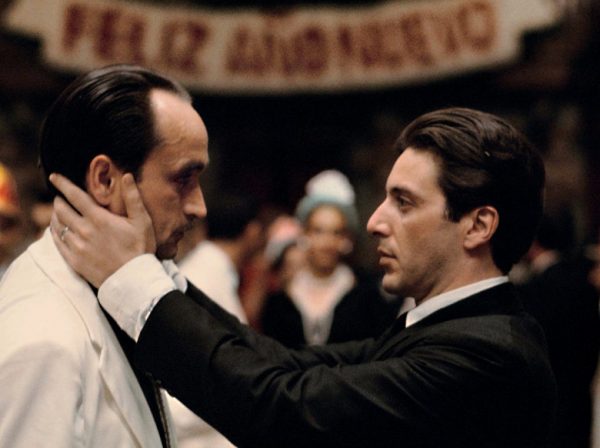
The Godfather Part II would do something not seen many times before or since. It followed a masterwork and matched it swing for swing. Here, a dual film mirrors Michael Corleone’s rise to power, as well as his fathers rise to prominence in his early days in New York (as played by De Niro). The duality between father and son at the same age in two different time periods is always enthralling. If The Conversation allowed Coppola to show a tight atmospheric control in paranoia, The Godfather films required him to go big, whilst retaining those intimate subtleties between characters. Notoriously long, but unforgettably mesmerising of course, the saga is perfectly continued and expanded upon in Part II.
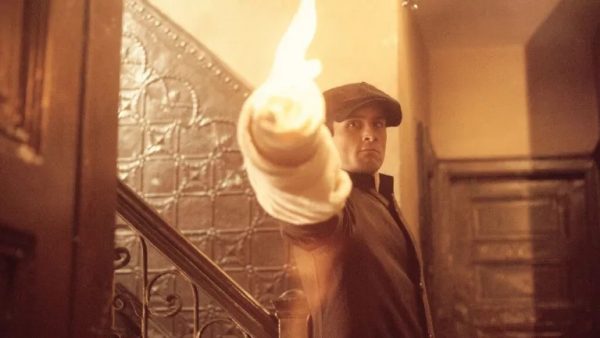
In the end, it’s hard to argue whether any director has helmed two films as strong the same year. Films which clocked up 14 nominations between them, and probably deserved even more. The Godfather Part II often ranks stratospherically high in all time great lists. It’s well worth the acclaim and matching its predecessor is an exceptional achievement in itself. The Conversation still ranks as one of the most overlooked films of all time. Despite the Oscar recognition and critical acclaim, it’s always been that film sandwiched between two Godfather films. In its own right, it stands tall and still remains one of the all time great entries into paranoia cinema. A genuine masterpiece that should pick up more love, particularly now in an age of surveillance paranoia.
What are your thoughts on The Conversation and The Godfather Part II? Has there ever been a stronger year at the Oscars?
Tom Jolliffe is an award winning screenwriter and passionate cinephile. He has a number of films out on DVD/VOD around the world and several releases due out in 2021/2022, including, Renegades (Lee Majors, Danny Trejo, Michael Pare, Tiny Lister, Nick Moran, Patsy Kensit, Ian Ogilvy and Billy Murray), Crackdown, When Darkness Falls and War of The Worlds: The Attack (Vincent Regan). Find more info at the best personal site you’ll ever see here.
Originally published March 26, 2022. Updated November 7, 2022.