Robert Kojder chats with I Play Rocky director Peter Farrelly…
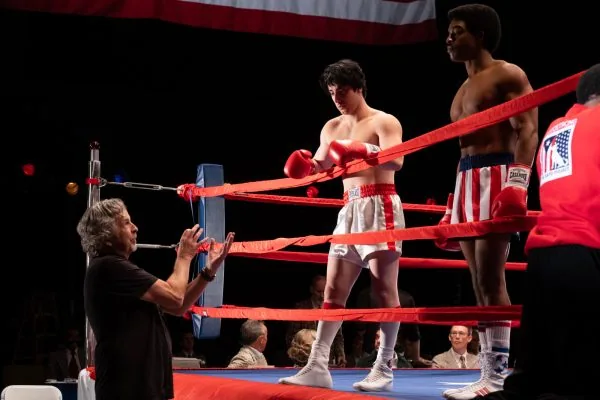
One half behind some of the most crudely influential and all-time great comedies, such as Dumb and Dumber, There’s Something About Mary, and Kingpin, Peter Farrelly has mostly veered into dramatic works that still retain comedic elements as a solo director. The best-known (and evasively contested) example is his Oscar-winning Green Book (for which he took home Best Director), while other projects have drawn mixed responses. Having gone back to some of his juvenile roots earlier this year with Balls Up!, it seems Peter is enjoying playing around with his range as a filmmaker, here with something much more serious but also hilarious and heartwarming in I Play Rocky [read our review here], which follows the underdog story of Sylvester Stallone getting the great underdog sports drama Rocky made in 1976.
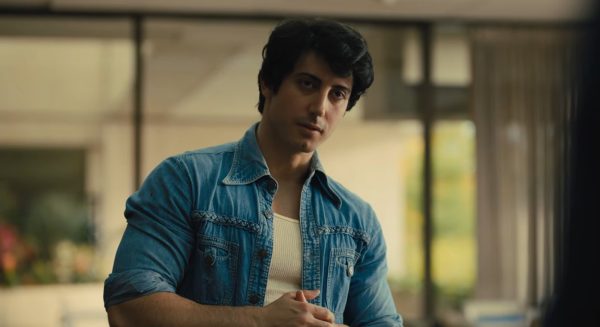
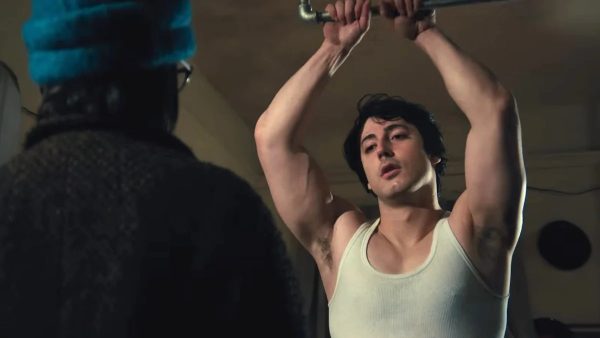
Working from a screenplay by Peter Gamble (a relative unknown, at least until now), the material is perfectly suited to Peter Farrelly: it’s a movie with a big heart, several laughs, and a story that could easily have gone wrong and been told as relentlessly cloying melodrama. It also boasts a star-making turn from Anthony Ippolito at the center, portraying Sylvester Stallone.
As a longtime admirer of Peter Farrelly’s career and someone who believes I Play Rocky is among the best movies of the year, it was a great opportunity to virtually talk to both him and Anthony Ippolito solo. Given the limited time, you will notice I tried not to indulge too much in his early location and sports talk, although I greatly appreciated it. There was a clear sense that, even with quick rotation interview slots, Peter enjoyed being there, talking with us, and was grateful for our support. We discussed the exceptional screenplay, the fact that this is also an underdog story about overcoming a disability Sylvester Stallone was born with, and Peter’s own battles pushing back against Hollywood studio executives. Enjoy below:
First, I want to say I loved the movie. It’s very heartwarming and funny.
Thanks Robert. How are you doing, man?
I’m good. And you?
Yeah, where are you?
I’m in Chicago!
[Referring to the Chicago White Sox pendant on the wall behind me] Yeah, is that the White Sox behind you?
Yep, I’m a White Sox fan.
There you go!
Thank you. When Sylvester Stallone talks about the complicated pregnancy, how he got the lisp, and how one side of his face doesn’t move. It dawned on me that this is also a movie about overcoming a disability, which also plays into the fabric of the underdog story. Did you ever see the film that way when you were making it? Because that struck a chord with me.
I never thought of it completely that way, but I always put people with disabilities into my movies because they are a part of life. And I’m not doing them any favors; I’m just… I read them. My casting agent, Rick Montgomery, has an open door; we read all people with disabilities or without disabilities, and we just pick the best person. In fact, there’s a guy… the scene where Sylvester sells the dog, and he comes in, and there’s the clerk in the store; he’s quadriplegic.
Oh, really?
Yeah, but you don’t see the wheelchair. To be clear, I didn’t hide the wheelchair. He was just behind the thing. I thought you did see the wheelchair. Then we were done, and his name’s Tobias Forrest, and he was like, “Man, I’m so glad you didn’t show the wheelchair.” I said, “I didn’t hide it.” We just didn’t happen to see it. But yeah, 30% of the world has a disability. So if you don’t put people with disabilities in, then you’re not telling a real story, and I hate that. So yeah, we’ve gone out of our way to cast people with disabilities.

I appreciate that so much. I’m not that familiar with Peter Gamble as a screenwriter, and even though I knew you were directing this, I wasn’t expecting as much comedy or to laugh so much while watching it. So was that part of the script, or did you bring your comedic touch to it as a director?
I brought in all the comedy! No, I’m kidding. It was in there. Peter Gamble wrote a masterpiece. This is the best script I’ve ever read. Peter is in his late 40s, and this is his first movie, but he’s done lots of rewrites. He does punch-ups, and he’s done ghostwriting for people, but this is the first one that he’s getting known for, which he should be because this is an amazing thing. No, it was there, and of course, when you see an opportunity to get a laugh… I think the one joke I came up with, honestly, was, you know, when they’re in the car, they’re in the Volkswagen out in the rain?
Yeah.
Well, it occurred to me before that day that originally it was supposed to be their Volkswagen. And I remember saying, “We never see that Volkswagen before or after.” You know, they don’t really need to have a Volkswagen. And someone said, “Well, how’d they get around?” I said, “I don’t know. Who cares? They take a bus.” But I thought, because we’re coming off a very serious scene there, I said, “Wouldn’t it be funny if she just got into anybody’s car?” It’s a great time to have a joke when you’re coming off a serious thing because the audience isn’t expecting it. So I came up with that one.
Yeah, I laughed at the end when Sylvester said, “Let’s get out of this car before we get arrested.” That’s funny. Keeping with the brilliant running sequence of Stallone rejecting the offers, what is a time when, making any of your films, a big studio said no, but you couldn’t bring yourself to compromise and kept pushing back?
They’re all hard. Every movie’s hard. It took five years to get Dumb and Dumber made, and they –
I love that movie.
Thank you.
My favorite comedy of all time.
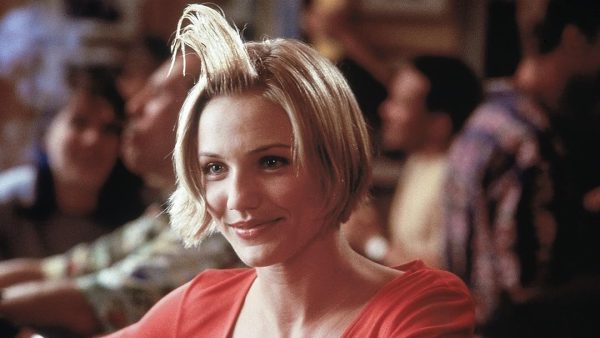
Well, I appreciate it. We really fought for that, you know, we didn’t quit on it because it could not… everybody passed and you can start to think they’re right and we’re wrong, but I never did. I was like, “These are idiots. I can’t believe they’re all passing.” Anyway, the one that we fought, like, really hard for was There’s Something About Mary, the zipper scene and the hair gel scene. The studio said, “No way. Cut those, and you got a green light.” I was like, “No, I’m not cutting those.”
No way, those are two of the funniest scenes in the movie.
They are the two funniest things. And they’re like, “Yeah, but it’s, it’s too much. That’s gonna be NC17.” I said, “No, it’s not. NC-17 is for titillation, and R is for laughs. And this is for laughs.” And also I told them, “We’ll also do it three ways” because, you know, the hair gel could be too much. We don’t know at that time. But we said we’re gonna shoot it with it and then we’re gonna do it again without it, so we could cut around it if it doesn’t work. They wouldn’t let us do it. We held out for six months, and finally they’d say, “Okay, just go do it.” And thank God we held out because those two scenes made the movie. I mean, the movie might work without them, but it wouldn’t be the legendary movie it is.
Well, I’m glad you did that. Thank you so much for your time. I’m glad we got to talk.
Yeah, pleasure man! I hope we cross paths again.
Yeah, me too!
Thank you to Peter Farrelly for taking the time to chat with us.
Robert Kojder