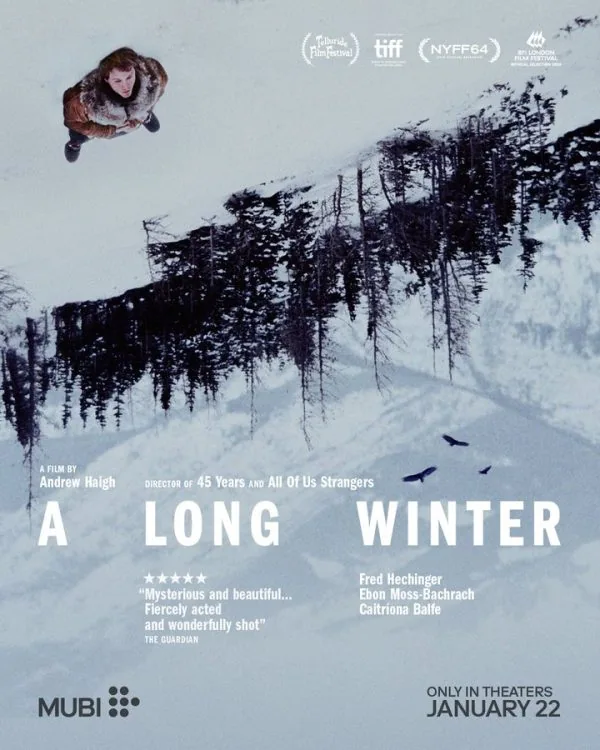
A Long Winter, 2026.
Written and Directed by Andrew Haigh.
Starring Fred Hechinger, Ebon Moss-Bachrach, Caitríona Balfe, Kit Connor, D’Pharaoh Woon-A-Tai, David Furr, Manuel Garcia-Rulfo, and Martin Freeman.
SYNOPSIS:
After his mother disappears during the first blizzard of the season, a young man refuses to give up hope as one long Colorado winter reshapes his relationship with his father and his understanding of the man he is becoming.
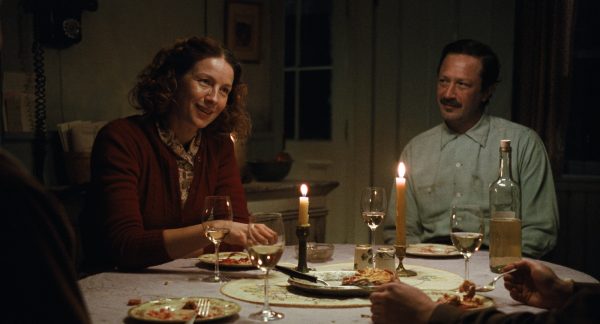
Less about the depressed, drunken disappearance of Mikey’s (Fred Hechinger) mother, Louise (Caitríona Balfe), into a blizzard and whether or not she is alive or dead (it’s a pretty open-and-shut case by the end of the first act, with only one thing left to do). Writer/director Andrew Haigh’s A Long Winter fittingly expands Colm Tóibín’s short story into a long season, as the young adult undergoes everything from a gay sexual awakening to discovering truths everyone in the family from his older brother Tommy (Kit Connor) and uncle Frank Martin Freeman protected or simply hid from him, including that his mom hasn’t been happy in the family for a long time and has a drinking problem. This is mostly brought on by his father’s unpleasant cruelty, Lester (Ebon Moss-Bachrach), and by giving her a life she never wanted (like living up in the Colorado mountains, sequestered from society, and having to drive a ways into town).
After a particularly heated argument, Louise wanders into the season’s first blizzard. This comes after Tommy leaves town to live his own life, unable to stay there anymore. Meanwhile, Mikey finds it difficult to embrace change in the same vein that someone hasn’t quite grown up or been exposed to not only the realities of the world around them, but the dynamics of their own family. Part of his existential journey is also about wondering if his mom loved the family or if it was merely his father she needed to get away from, even if it meant risking death in harsh elements.
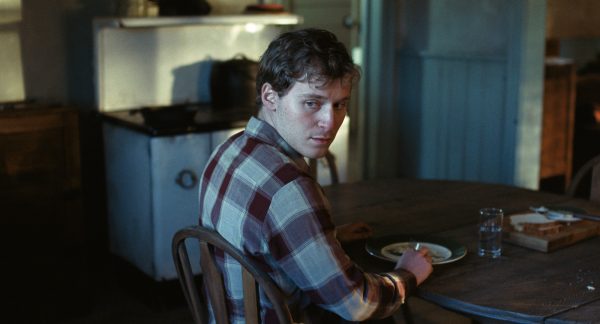
Accentuated by striking cinematography from André Turpin that captures both the beauty of the cold mountains and their vastness, putting into perspective how cut off Mikey is from the outside world (another part of the reason his brother is eager to leave is that they genuinely have no friends, which has nothing to do with their personalities), the young man searches for inner peace among the many revelations about his family that, by design, don’t always seem surprising to us, highlighting his naivety.
However, just when it begins to feel like Andrew Haigh is beginning to stretch this short story into a film that should have stayed on the shorter side, the helpless Lester, refusing to take up traditional matriarchal duties in this 1950s household, employs young orphan Jimmy (D’Pharaoh Woon-A-Tai) to do the cleaning and cooking. Lester’s unfiltered bullying knows no bounds, while Mikey begins to see his father for who he is and comes into himself, a different man he wants to be, finally embracing change. None of this is to say that Lester didn’t love his wife, but that his flaws and toxic masculinity (especially given the era) firmly collide with his son’s growing and expanding sense of self and acceptance of who he is and wants to be.
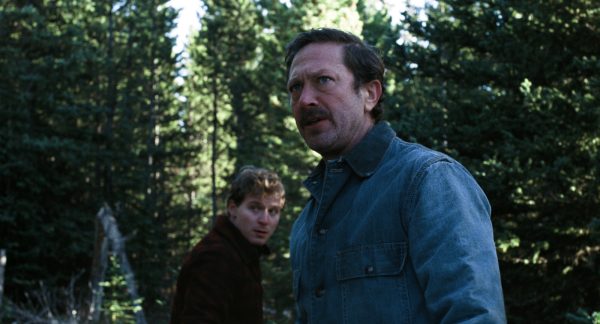
These character and family dynamics continue to shift thoughtfully, as A Long Winter movingly asks what it means to live. It’s another film of quietly powerful dialogue from Andrew Haigh, doing much more with its premise than it initially lets on; even if it feels a bit too long in places, it still delivers an obvious but natural, memorable climactic scene of emotional catharsis and nuanced character portraits that always pull back into complexity when they threaten to become too big or loud.
Flickering Myth Rating – Film: ★ ★ ★ ★ / Movie: ★ ★ ★
Robert Kojder