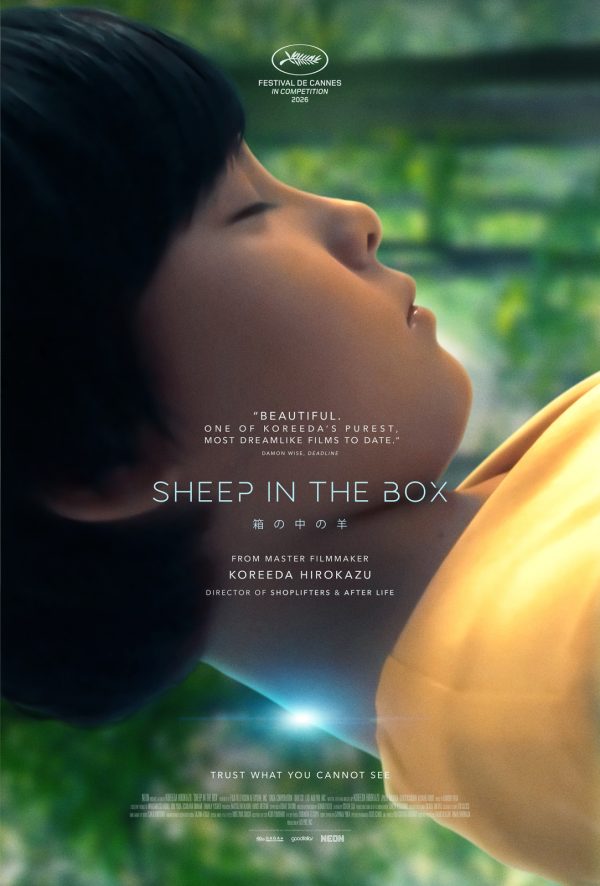
Sheep in the Box, 2026.
Written and Directed by Hirokazu Kore-eda.
Starring Haruka Ayase, Daigo Yamamoto, Kuwaki Rimu, Nana Seino, Kanichiro, Hinata Hiiragi, Akihiro Kakuta, Kayo Noro, Mari Hoshino, Ayumu Nakajima, Kimiko Yo, and Min Tanaka.
SYNOPSIS:
Set in the near future, Otone Komoto works as an architect. She is married to Kensuke Komoto, who runs a construction company. The married couple decide to welcome a humanoid robot into their home as their son.
While there have been a few filmmakers so far to take a crack at the notion of generative AI and tasteless, greedy corporations capitalizing on the misery of others to peddle inhuman replacements for recently deceased family members, they typically have been independent, small-scale features missing the mark entirely for other reasons. Even with an unflattering reception out of Cannes from critics and colleagues I trust, there was reason to hold out hope that writer/director Hirokazu Kore-eda’s Sheep in the Box would, at the very least, come out as a cut above those misfires. It was just as possible that I could have been the outlier and found something special in it; Monster, Shoplifters, and more have ranked highly on my end-of-year lists. There was simply a reason to be hopeful, considering a filmmaker known for crafting sharply observed, emotionally devastating family dramas (blood-related or found) is still operating within that wheelhouse, even when including an AI child replacement.
What I never would have guessed or expected is that this film fails for the same reasons as many of those others: a disinterest in condemning or denouncing AI in the most general terms, or even examining how such a replica could go wrong and inherent privacy invasions. That’s not to say it needs to become The Terminator, but this is naively optimistic and lacks any truly tough conversations about the technology. Full disclosure, I did also interview Hirokazu Kore-eda for the film where he mentioned that he was less concerned with the AI aspect (and seemingly whatever implications could be drawn from the story), and more interested in the narrative as about giving life to the dead. With that in mind, it’s easier to appreciate, even if it still comes across as flawed, with blinders on when it comes to AI.
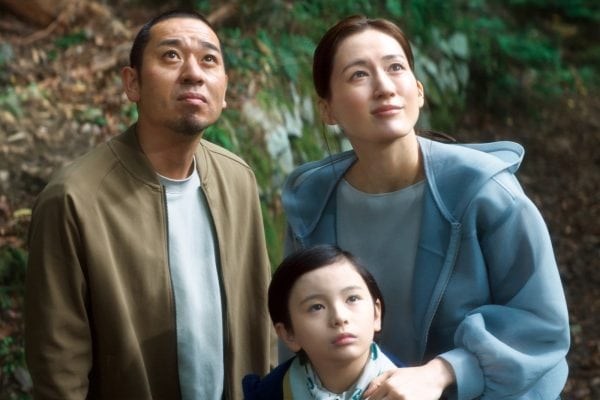
The family drama also takes a baffling turn, conflating these robots (referred to as humanoids) with creations more along the lines of nature that will be here long after each passing generation or human existence, with the implication that they are more advanced than us. Much of this ties to the fact that young Kekaru (Kuwaki Rimu) has parents who are interested in gardening, woodworking, train-station routes, and other areas related to nature.
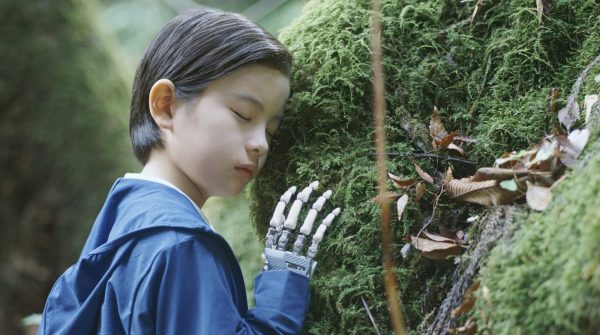
Recreated using archival audio, videos, and photographs, while specifically omitting anything to do with trains as Kekaru died in a related accident that might have involved a kidnapping attempt (there have been a string of such instances in the area, although law enforcement has ruled out anything such took place here, leaving that more as a vessel to place blame rather than anything grounded in validity), there is a natural hollowness to the humanoid. Kekaru is described by his mom, Otone (Haruka Ayase), as a boy who had high energy and loved food, both of which this synthetic form can’t replicate. That juxtaposition is compelling and should have been pulled on more, as it shows the parents aren’t getting an accurate replica of their boy back even in humanoid form. It can, however, amass knowledge of the previously mentioned interests quickly, especially as a means to convince its owners that it is real, sentient, and, in some ways, capable of understanding more than their actual child ever could.

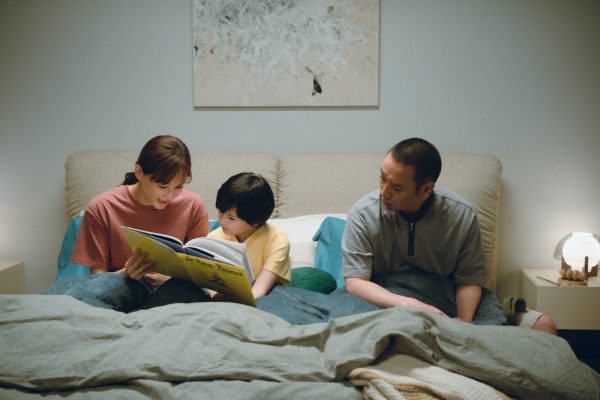
This is all uncanny, with the film mining it for familiar, disappointingly surface-level family dynamics. Otone, having initially received a delivery drone package with a notice from the REbirth corporation that she has been selected to partake in a free trial of a humanoid replica with a contract that she can terminate at any time, is certainly skeptical about the proposal but nonetheless caves due to grief. Her husband, Kensuke (Daigo Yamamoto), justifiably opposes, although he lets her do as she wishes. Amusingly, he compares the humanoid to a Tamagotchi (an electronic pet in a handheld device, for those unfamiliar who never played with one growing up). The uninspired, loosely explored twist is that as time goes on, it is Otone who increasingly feels empty, surrounded by the humanoid replacement, with Kensuke (alongside his work friends) taking a liking to the boy for how instantaneously he picks up details and skills, such as playing baseball, getting emotional catharsis out of it. Individually, they confront and process the stages of grief, although that, too, is only a half-concern in a film with much on its mind.
Humanoid Kekaru also meets a misfit group of human teenagers and fellow synthetics, with a leader (Kanichiro) plotting a revolt by way of fleeing into nature. He removes Kekaru’s GPS tracking device and gradually indoctrinates him into believing that he isn’t meant to be whatever these humans need or want him to be. From there, Sheep in the Box (deriving a title from a passage found in The Little Prince, taking on new meanings as the story nears its conclusion) doubles down, abstaining from any corporate criticism while leaning into the idea that the humans are at fault (and they are to an extent for giving in and purchasing something so sinister from malicious bloodsuckers), to awkwardly push co-existence with AI as one and the same to nature.
Strong performances, a solid premise, and plentiful striking shots of green scenery with an assortment of trees can’t overcome that misguided kumbaya-with-AI approach or deliver anything close to the dense family dynamics, layers, and emotional wallop typically found in Hirokazu Kore-eda’s works.
Flickering Myth Rating – Film: ★ ★ / Movie: ★ ★ ★
Robert Kojder