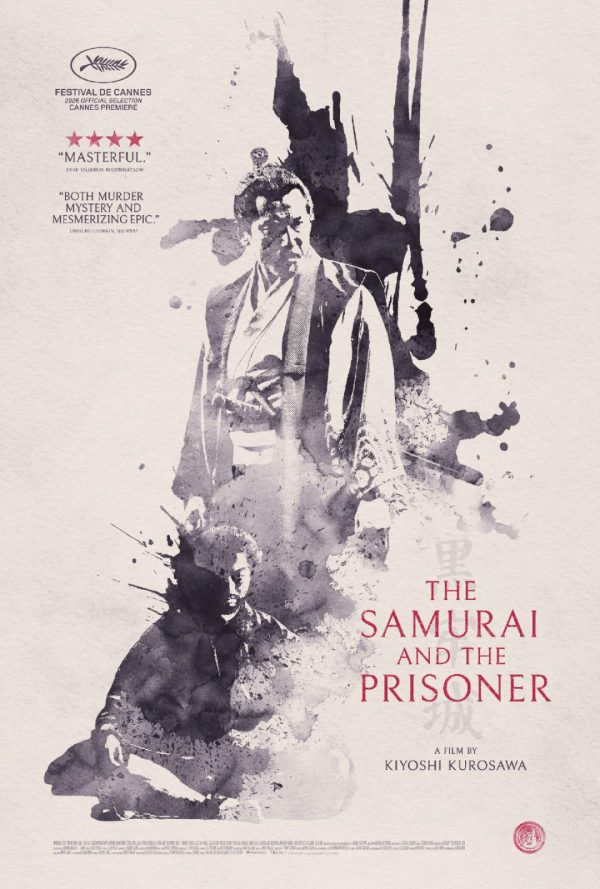
The Samurai and the Prisoner, 2026.
Written and Directed by Kiyoshi Kurosawa.
Starring Masahiro Motoki, Masaki Suda, Yuriko Yoshitaka, Munetaka Aoki, Ryota Miyadate, Tasuku Emoto, Joe Odagiri, Yusuke Santamaria, Mitsuo Yoshihara, Ryota Bando, Yoshiyoshi Arakawa, Kiyohiko Shibukawa, Ikkei Watanabe, Yoshimasa Kondo, Toshihiro Yashiba, Masatoshi Kihara, Yamato Kochi, Mutsuo Yoshioka, Shusaku Kamikawa, Oshirō Maeda, and Shingo Bando.
SYNOPSIS:
Set in 16th-century Japan, follows Lord Murashige Araki, who, besieged in his castle, confronts mysterious crimes and allies with imprisoned strategist Kanbei Kuroda to uncover the truth.
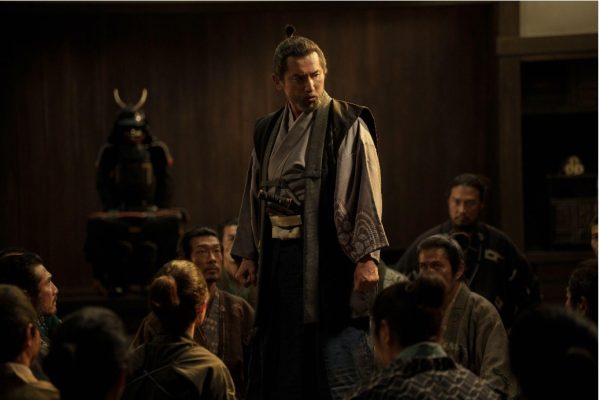
In 1578, Feudal Lord Araki Murashige betrayed his superior, the “great unifier” Lord Oda Nobunaga, with the why of it all largely remaining a mystery. Based on a novel by Honobu Yonezawa, writer/director Kiyoshi Kurosawa’s The Samurai and the Prisoner explores a theoretical spin on why that might have been, in the form of an episodic series of murder mysteries that the traitorous war general (here played with dignity and a strong moral code by Masahiro Motoki) must solve whilst strategizing from inside Itami Castle on how to win this war, which seems to hinge on joining forces with another faction, among other plans.
With that in mind, this is a narrative that is much more rewarding if one sets aside the more expansive history of feudal Japan (in fairness, the film itself doesn’t seem too concerned with that either; you’re also reading a review from someone who is more well-versed in Onimusha, the video game series that mined much of this for absurd action involving an army of demons) to focus on it as a character study about an outlier feudal lord who would rather resort to solving any situation by using anything but violence, with the filmmaker drawing a stark contrast between that behavior to the more hypocritical Lord Oda Nobunaga (seen in a flashback played by Shingo Bando) ruthlessly slaughtering innocents and civilians or quite literally anyone if they stand in the way of conquest. Perhaps that corruption of power had something to do with the falling out. Elaborating on that thought, perhaps it also only makes sense to take a mystery and turn it into a film about other mysteries that, when solved, inform more about the protagonist.

The other key element here is that, for various reasons, Lord Araki Murashige isn’t adept at identifying the culprit on his own, whether it be the case of a child shot by arrows, the distorting of a dead man’s face, a death involving stolen antiques, and the most entertaining plus morbidly humorous of them all, potential “divine punishment” involving lightning striking a soldier about to reveal key information that could put the general in a bind, who is already losing morale at this point, also losing trust from the rest of his crew. This means that he resorts to a captive Lord Oda Nobunaga lieutenant, Kuroda Kanbei (Masaki Suda), who has his own reasons for working with his enemy despite being locked up in the basement. Much of it boils down to Lord Araki Murashige missing what’s right in front of him and getting to see something from a perspective that even he sometimes seems surprised he hadn’t already approached.
Managing the situation while holed up in a castle and strategizing alongside everyone from trusted soldiers to his wife Chiyoho (Yuriko Yoshitaka), nearly everyone closest to him becomes a suspect at one point or another. To the film’s credit, the episodic nature builds to a remarkable 30-ish minute-long twisty payoff of profundity about honor, war, and suffering through a cyclical lens, albeit at the cost of a repetitive structure that is not aided by a dry tone and similarly bland supporting characters, even if any one of the mysteries themselves would have made for a compelling whodunit on its own.
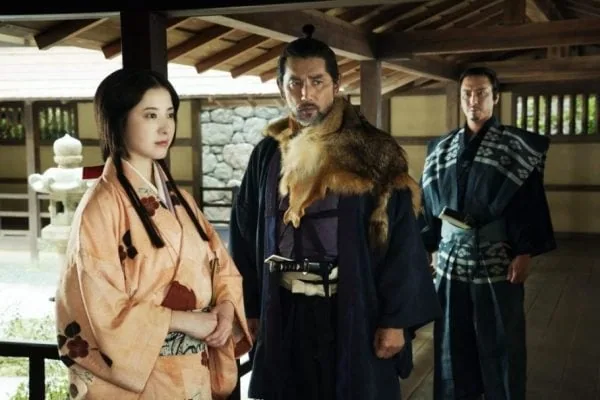
Thankfully, Kiyoshi Kurosawa is a gifted filmmaker (often taking a classical approach here for a movie that has much in common with Akira Kurosawa), here garnering some riveting performances from his main players in what often comes across as theatrical staging with dynamic camera movement, even during one-on-one conversations that gradually heat up as they pick one another apart (there is also a briefly stunning shot of dozens of soldiers charging into battle in convincingly authentic gear, alongside other immersive period piece details). The sum of The Samurai and the Prisoner yields more than its sometimes unwieldy and sluggish structure, but the third act also recontextualizes the whole into something with greater complexity.
Flickering Myth Rating – Film: ★ ★ ★ ★ / Movie: ★ ★ ★
Robert Kojder