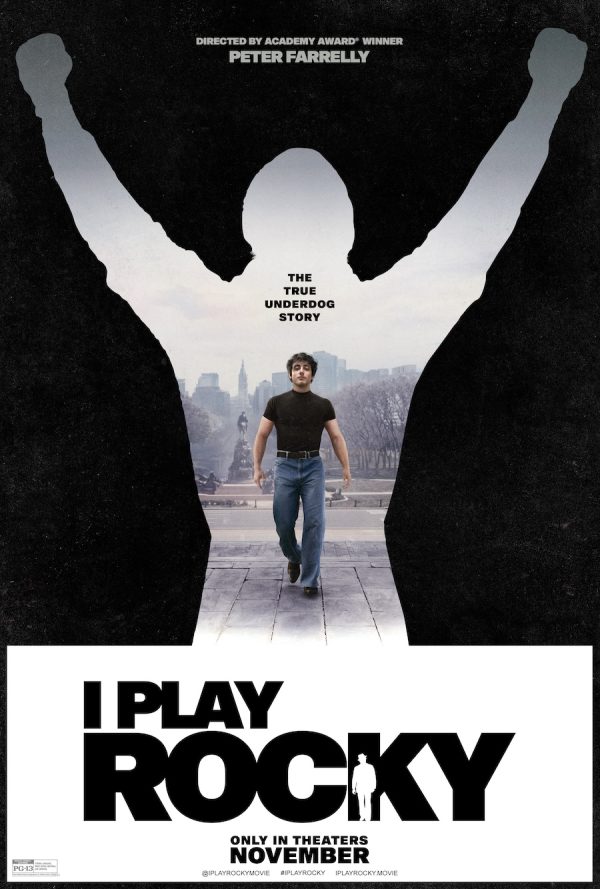
I Play Rocky, 2026.
Directed by Peter Farrelly.
Starring Anthony Ippolito, AnnaSophia Robb, Stephan James, Matt Dillon, P.J. Byrne, Jay Duplass, Kiki Seto, Toby Kebbell, Tracy Letts, Robert Morgan, Saul Stein, Scott Teller, J Nycole, Diego Pope, Michael Fuchs, Paul Sloan, Erik Palladino, Martin Fisher, Thomas Canestraro, Carmine Giordano, Jackie Flynn, Nikki Tyler-Flynn, Rob Demery, Damian Conrad-Davis, and Trevor St. John.
SYNOPSIS:
A true story of an unknown actor who believed he wasn’t meant to just write Rocky, but to play Rocky Balboa. Facing constant rejection, Sylvester Stallone risks everything, refusing to give up the lead role against impossible odds.
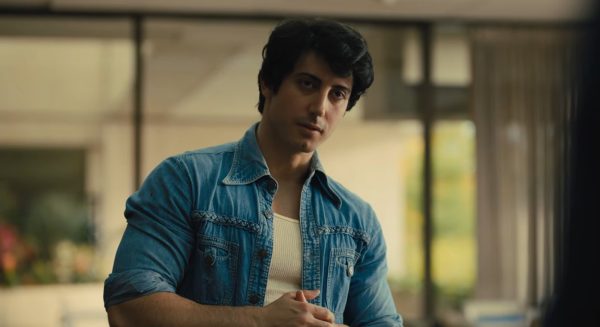
Perhaps it should have been expected given that I Play Rocky – which essentially takes us through the underdog story of making one of the all-time great underdog movies and the birth of a distinctly voiced star in Sylvester Stallone – is directed by Peter Farrelly, but this film, which could have wallowed in self-aggrandizing, overly self-serious drama, is actually quite funny, reveling in the absurdity. Think The Disaster Artist, but the movie being made actually goes on to be an Oscar-winning classic. Working from a screenplay by Peter Gamble (a relative unknown, although I can’t imagine his status staying that way for long after this undeniable crowdpleaser), the heart and emotionality are seamlessly woven into that fabric, as is somewhat of a revelation that this is also a story about a man overcoming a disability by persistently believing in himself.
Even if someone hasn’t seen Rocky or Rambo, or Sylvester Stallone in any movie, they most likely know the face, and they sure as hell know the voice, which is often a punching bag (pun intended) for jokes and mockery. I myself must admit to having a laugh at the expense of a voice that sounds like gibberish. Hell, I wondered what kind of preparation it takes to get that voice (I actually asked Anthony Ippolito about it). That performance is not only a tremendous physical and vocal transformation, but it also captures the soulfulness and unwavering resilience that go hand in hand with the Rocky screenplay he wrote.

The point is that there is a scene early on where Sylvester, out for a walk with love interest Sasha (AnnaSophia Robb, who is, yes, saddled with the role of supporting her man, but is still given a decent amount of screen time to make an impact as an integral part of his character), confides that there was a complicated pregnancy involving forceps, which left part of his face paralyzed, explaining the mushy, garbled voice. Now, I’m fully aware Sylvester Stallone’s voice will always be mined for comedy, and I don’t want to police that after being educated, but watching this film as a disabled person, well, it certainly got me in his corner. I wish the film had brought it up a couple more times, but mentioning it at all adds a great deal to the beating heart inside the wall-to-wall situational comedy.
In a vain Hollywood, circa 1975, as one can imagine, this uniqueness doesn’t exactly get Sylvester Stallone (who tried going by Mike) much acting work; at one point, desperate for cash, he took on a risqué, full-frontal nudity role. While working at a movie theater alongside Sasha (where they have an amusing meet-cute), she notices his attention to detail in dialogue and suggests he try writing his own scripts, and that, if a producer ever picked them up, he could star in them. About a year and several screenplays later, Rocky catches the attention of producers Irwin Winkler and Robert Chartoff (P.J. Byrne and Toby Kebbell), who eagerly want to make the movie, even if it means hilariously leveraging studio head Sandy Maddox’s (Tracy Letts) paranoia about letting Paramount catch fire unexpectedly with another The Godfather, getting to it first.
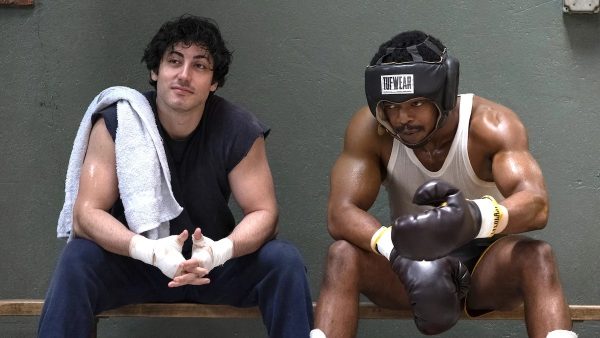
There are budget concerns that can be worked around, but the bigger problem for the studio is that Sylvester Stallone is dead set on starring in the film, and refusing to sell the rights no matter how high the offer rises, continuously holding out in what has to be one of the most comedically charged and chaotic sequences of the year. The film also earns some emotion through Sylvester’s beloved dog, Butkus, and wisely doesn’t play it too hard for cloying schmaltz.
The second half is similarly funny, while smartly taking some of the shooting and filming days and blending them into a montage befitting of Rocky. It even has a bit of a cinema lecture about the origins of the Steadicam. A supporting cast rounds out the rest of the key actors from Rocky, all of whom get a moment or two to shine, keeping the focus on Sylvester, not falling behind on the shoot, and digging into the emotional depths and unresolved tension between him and his father, Frank Sr. (Matt Dillon), to land one memorable scene.
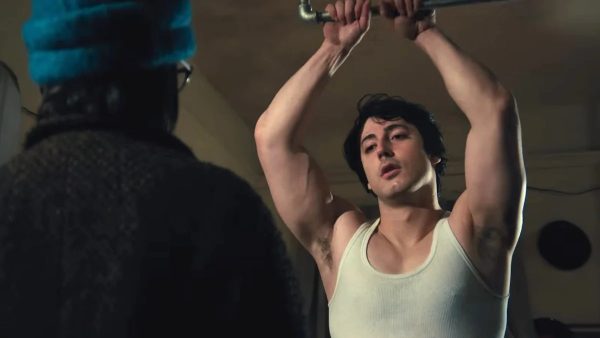
And in a sea of movies nowadays that typically drag on for one scene (or sometimes multiple) too long, I Play Rocky is so aware of the point of its narrative that it ends on a perfect note, making it the ultimate crowd-pleaser take on the ultimate underdog story. It doesn’t just go the distance; it knows exactly where the distance should end.
SEE ALSO: Exclusive Interview – Director Peter Farrelly on I Play Rocky/
Flickering Myth Rating – Film: ★ ★ ★ ★ / Movie: ★ ★ ★ ★
Robert Kojder