Ricky Church on Mike Flanagan’s new adaptation of the Stephen King classic Carrie…

Mike Flanagan’s latest Stephen King adaptation of Carrie has been released on Prime Video and is high in the ranks not only of Carrie adaptations, but of the many King adaptations overall. Its cast, writing and adherence to the source material while finding many avenues for Flanagan to modernize and put his own spin on it makes it a very worthwhile watch to its fans. That is quite an impressive feat for a 50-year old story most people either know by heart or at the very least have the general gist of with its iconic imagery of Carrie White drenched in a bloody prom dress through its previous films and parodies.
The strongest element in the series is the characters and their individual arcs, fleshing them out to further understand their motivations. Flanagan does have the obvious benefit of examining them over the course of nearly eight hours rather than two as in the previous films, but the way he stretches the story out so it doesn’t feel like he’s adding unnecessary filler or padding to justify the runtime (as, say, The Hobbit trilogy) gives the characters much more depth than any other Carrie adaptation before it.
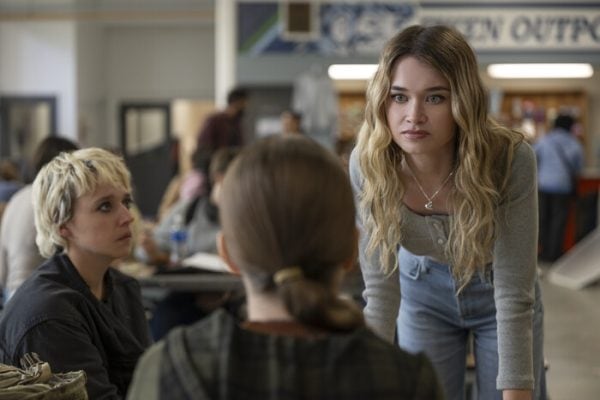
Nowhere is this clear enough than the character of Chris Hargensen, played in the series by Alison Thornton as Carrie White’s main bully and unwitting instigator of the prom massacre. Chris remains, as always, the mean girl who ruthlessly bullies Carrie and leads the charge in the shower incident and its aftermath, but the added subplot of her family life provides much more reasoning for her character than simple revenge or being mean for the sake of being mean. Her father is a bully himself, one who makes everything about him rather than focusing on Chris’ needs as made abundantly clear when his response to her worrying about paying for college is to say “Not everything is about you.”
As we learn later, her father had covered up a lot of Chris’ misdeeds instead of actually taking care of the root problem while her mother, despite being a nice and caring person in complete opposition to her father, regularly leaves their marriage and doesn’t seem much involved in Chris’ life to the point she is surprised just how much trouble her daughter has actually caused at school. That is to say nothing of her new relationship with another family and Chris’ treatment of her potential step-sister where, after seeing Chris bully her at the dinner table, her only concern is that Brooklyn remains off limits to her snide remarks instead of emphasizing she shouldn’t be speaking to anyone that way.
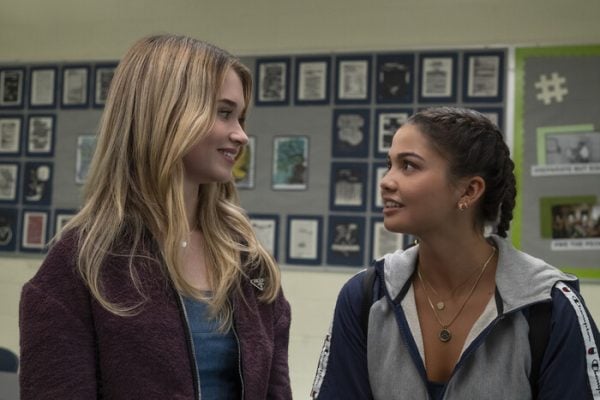
While these are all interesting reasons to explain why Chris is the way she is, Flanagan doesn’t use those to excuse her actions. Chris is still a bullying monster who dodges accountability at every turn, showing her tunnel vision perspective. She is given so many chances by her friends and teachers to own up to running the @Carriered account among the other things she’s done yet does not take them because she cannot admit she was wrong. Even Carrie herself gives her a chance in arguably the series’ best scene in episode six when they are alone in the washroom. It is a powerful moment when Carrie lists all the work Chris put into pretending to be a friend and why she couldn’t be a real one that Chris replies with genuine confusion as to why she didn’t just do that, but quickly reverts back to her narcissism by focusing on everything Carrie is “doing” to “ruin” her future. It is telling that when she is given her first opportunity by Principal Grayle she looks to her father who shakes his head, encouraging her not to admit to anything.
That is where Flanagan’s update succeeds so well. He and his team, who consist of all female directors and mostly female writers, focus on the generational trauma that is passed down to the children. Chris grew up learning all of her father’s worst behaviour, Emaline’s parents seemingly rejected her, and Margaret and Ralph White tried passing their conspiratorial and narrow beliefs onto Carrie. She is the only one to escape the generational trauma, yet is still targeted by her mother for branching out and embracing the larger world.

Margaret herself is one of the reasons Flanagan’s modern update works so well as she’s still just as religiously devout as the other Carries but now added with beliefs that would be right at home with QAnon and other fringe conspiracies. Her desperation to control her daughter almost come from a misguided place to protect Carrie. After all, despite how bad of a person she is she is still right about quite a few things such as how horrid the school’s live shooter drills are or its willful ignorance of Chris’ actions to the point Chris and her friends are actively bullying people in the classroom and the teachers just sit there stonefaced. However, Margaret’s manipulative tendencies end up costing Carrie the very safety she’s striving for as Margaret’s attempt to spy on Carrie drastically backfires and then actively pushes Chris’ refusal to apologize, further setting the stage for Carrie’s bloody humiliation and revenge.
The rest of the modernization worked incredibly well, showing how bullying has adapted in the age of social media with its dangers and worldwide reach as well as the symbolism of Carrie’s massacre which takes on new meaning in today’s world. It is no wonder Flanagan makes Carrie’s introduction to school include a live shooter drill and mentions are made by prom survivors that they thought it was a shooting at first. The prom massacre is deliberately evoking a mass shooting, an everyday fear children and parents in the US have had to wrestle with for decades. While the show hides behind the trappings of a telekinetic girl, the horror she unleashes and the people apparently hunting her, it taps into something familiar all audiences can recognize and share fear over.
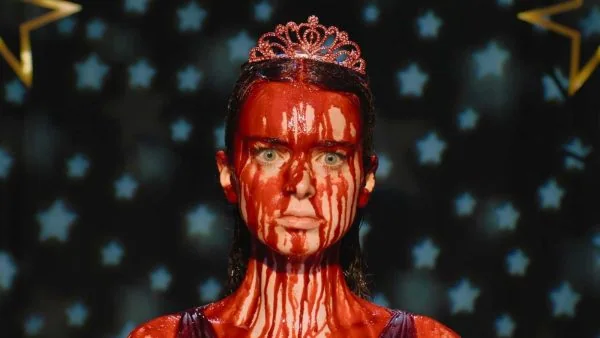
It is also that last point why Carrie is different from its previous adaptations as Flanagan includes the subplot of a group of young women with the Shining and other supernatural abilities. While the end of King’s novel made a point to show others being discovered with similar abilities to Carrie, this is the first time an idea like this has been put into the story, especially with the brand new character Emaline influencing Carrie’s actions. With Flanagan’s stated desire to see Carrie as a three-season series and the Easter eggs to other King works sprinkled throughout, namely to The Dark Tower and Flanagan’s dream of adapting King’s magnum opus at Prime Video, we may be seeing the beginnings of Flanagan’s connected King universe and the journey to the Tower.
What did you think of Carrie? Did you like to modern updates and potential connections to Flanagan’s other King adaptations? Let us know on our social channels at @FlickeringMyth…
Ricky Church